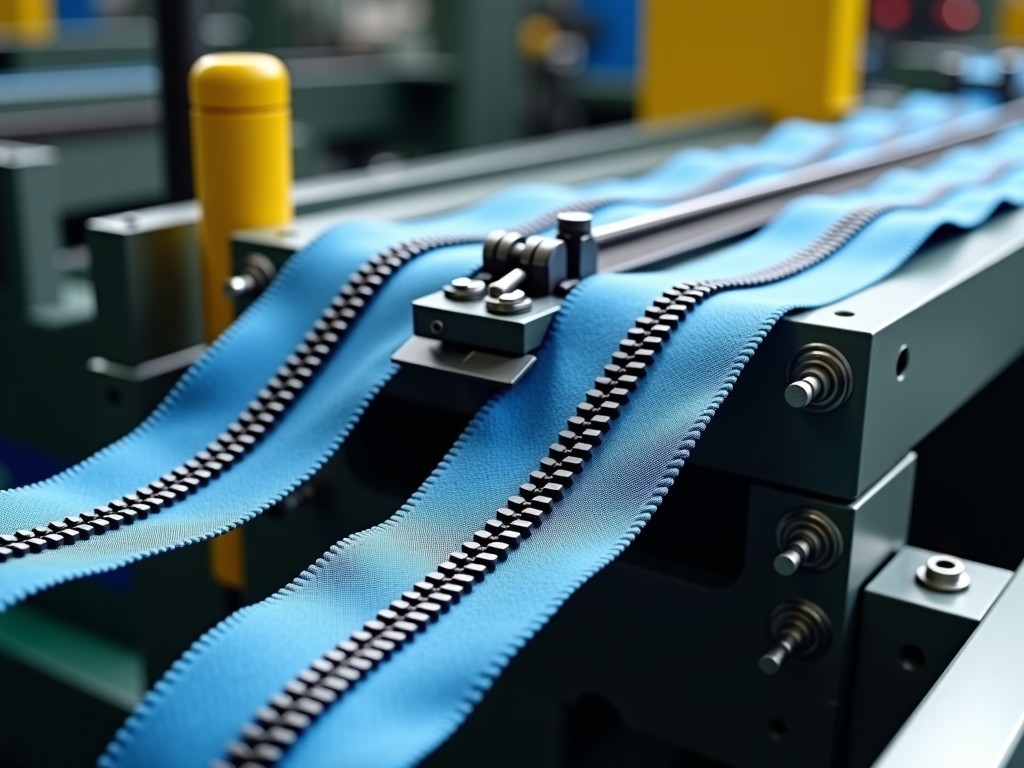
Bulk Invisible Zipper Machinery
Invisible zippers, also known as concealed zippers, require precise needle alignment and consistent tension to hide the teeth within the fabric seam. Manufacturers that produce large volumes of apparel rely on machinery capable of maintaining these tolerances over extended runs without frequent adjustment. The following details outline the engineering considerations that affect performance and longevity of such equipment.
Key Technical Characteristics
Machine speed is typically expressed in stitches per minute, with industrial models ranging from 800 to 1,200 stitches/min for invisible zipper applications. Needle gauge selection influences the smallest zipper tape width that can be accommodated, commonly between 3 mm and 6 mm. A drop‑feed or differential feed system helps prevent puckering on lightweight fabrics while maintaining stitch integrity.
Tension control mechanisms often incorporate electronic sensors that adjust thread tension in real time based on fabric thickness variations. Changeover time between different zipper widths is reduced through modular needle plates and adjustable guide rails, allowing operators to switch sizes in under five minutes. These characteristics directly impact uptime and labor costs in high‑mix production environments.
Typical Specifications
| Parameter | Typical Value | Notes |
|---|---|---|
| Maximum Speed | 800–1,200 stitches/min | Dependent on motor and control firmware |
| Zipper Width Range | 3 mm – 6 mm | Customizable plates available |
| Motor Power | 0.75 kW – 1.5 kW | AC servo or stepper options |
| Overall Dimensions (L×W×H) | 1,200 mm × 600 mm × 1,400 mm | Approximate, varies with accessories |
| Net Weight | 180 kg – 250 kg | Includes base frame and safety covers |
Applications in Apparel Manufacturing
Invisible zippers are frequently used in dresses, skirts, and formal wear where a visible fastener would detract from the garment’s appearance. High‑volume producers benefit from machinery that can maintain stitch quality across hundreds of meters of tape without operator intervention. Consistent performance reduces rework rates, which is critical when working with delicate fabrics such as silk or chiffon.
Additionally, the ability to handle varying tape thicknesses allows a single line to produce both lightweight summer garments and heavier winter outerwear. This flexibility supports lean manufacturing principles by minimizing the need for dedicated machines per product family.
Customization Options
- Needle plate sizes from 2.5 mm to 7 mm width
- Adjustable feed mechanisms (drop‑feed, differential, or walking foot)
- Electronic tension control with programmable presets
- Safety interlocks and laser guards compliant with CE standards
- Optional touchscreen interface for recipe storage
Quality Assurance & Testing
Before shipment, each unit undergoes a functional test run using standard invisible zipper tape to verify stitch formation, tension consistency, and feed accuracy. Wear parts such as needles, loopers, and feed dogs are inspected against manufacturer‑specified wear limits. Calibration records are retained and made available to customers upon request.
Frequently Asked Questions
Can dimensions be customized? Yes, the frame width and height can be adapted to fit specific production line layouts; detailed drawings are required for quotation.
What information is needed before a quote? Required data include target zipper width range, desired stitches per minute, fabric types, and any required safety certifications.
How is quality inspected? Each machine is tested with a standardized tape sample; stitch length, tension variance, and feed synchronization are measured against predefined tolerances.
Contact Us
For technical consultations, quotation requests, or to discuss specific application needs, please reach out using the form below.
Request Information