Custom Invisible Zipper Ironing Machine Company
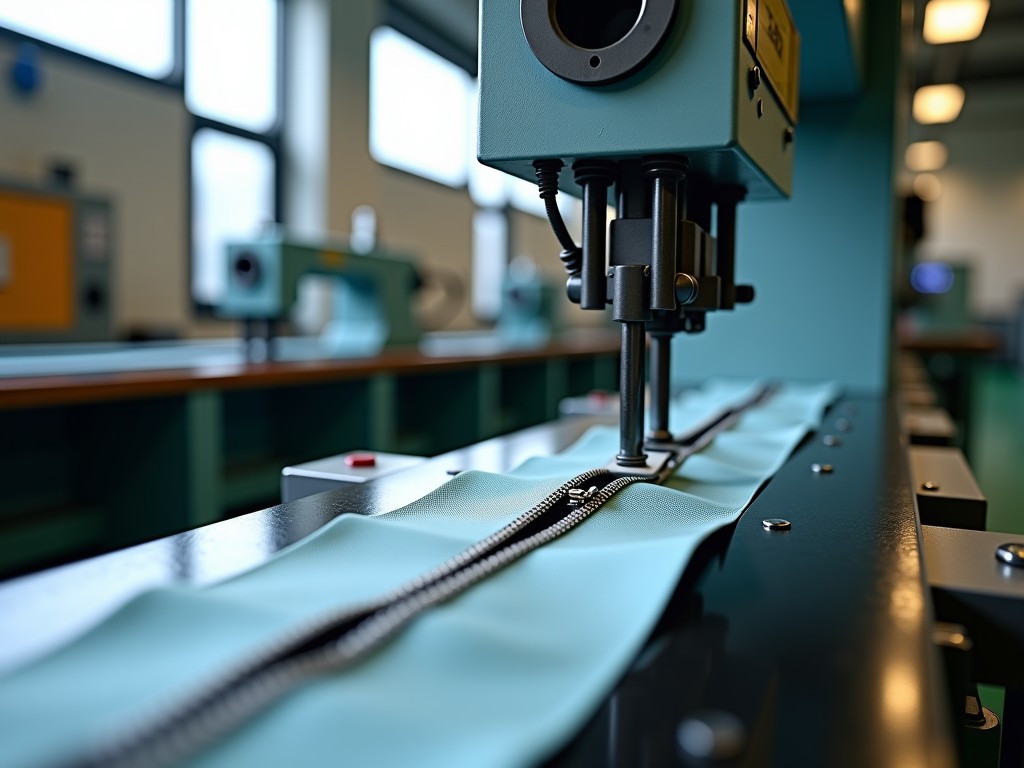
An invisible zipper ironing machine applies controlled heat and pressure to the tape of concealed zippers, removing creases that occur during storage or sewing while preserving the delicate coil structure. Unlike conventional pressers, it operates on a narrow contact zone that matches the zipper width, preventing damage to the surrounding fabric.
Working Principle
The device feeds the zipper assembly through a pair of heated rollers whose surface temperature is regulated by a PID controller. Sensors monitor roller temperature and zipper transit time, adjusting heat output in real time to maintain a set point typically between 120 °C and 180 °C depending on tape material.
A variable speed conveyor synchronizes with roller rotation, ensuring each zipper segment receives a consistent dwell time, usually between 0.8 s and 2.0 s. Pressure is applied via pneumatic actuators that can be fine‑tuned from 0.2 MPa to 0.5 MPa to accommodate different tape thicknesses.
Technical Specifications
| Parameter | Typical Value | Notes |
|---|---|---|
| Maximum zipper width | 12 mm | Customizable up to 20 mm |
| Roller temperature range | 100 °C – 200 °C | Adjustable in 1 °C steps |
| Conveyor speed | 5 m/min – 30 m/min | Variable frequency drive |
| Power consumption | 2.5 kW | At nominal settings |
| Overall dimensions (L×W×H) | 1200 mm × 800 mm × 1500 mm | Footprint includes control cabinet |
Customization Options
- Roller surface material – hardened steel, ceramic coating, or PTFE for low‑friction tape.
- Number of temperature zones – single zone for uniform tapes or dual zone for multilayer composites.
- Width adjustment mechanism – manual micrometer or motorized actuator with preset recipes.
- Control interface – touchscreen HMI with PLC backend, optional remote monitoring via Ethernet.
- Integration kits – conveyor sync adapters for existing sewing lines or standalone feeding tables.
Typical Applications
In garment manufacturing, invisible zippers are frequently used in dresses, skirts, and high‑end outerwear where a visible seam would compromise aesthetics. The ironing step ensures the tape lies flat against the fabric, reducing puckering during subsequent top‑stitching and improving the final drape.
Automotive interior suppliers employ the machine on seat‑cover zippers that undergo repeated flexing; a smooth tape prevents stress concentrations that could lead to premature failure. Similarly, upholstery firms treat decorative cushion zippers to maintain a premium look after packaging and transport.
Because the process operates at low contact pressure and limited temperature exposure, it is suitable for heat‑sensitive tapes coated with polyurethane or water‑based adhesives that would melt under conventional press plates.
Quality Control Philosophy
Each unit undergoes factory acceptance testing that includes temperature uniformity verification across the roller surface using calibrated thermocouples, pressure repeatability checks with a digital gauge, and speed accuracy validation via a laser tachometer.
Before shipment, a sample run of zipper tape is inspected for gloss change, dimensional stability, and adhesion strength following ISO 105‑B02 colourfastness and ASTM D2256 tensile tests. Results are recorded in a traceable test report linked to the machine’s serial number.
Preventive maintenance schedules are provided based on operating hours, with wear‑part indicators for roller bearings and pneumatic seals to help customers plan downtime.
Frequently Asked Questions
- Can the roller width be changed for different zipper sizes? Yes, the width adjustment module accommodates ranges from 4 mm to 20 mm; custom shafts are available upon request.
- What information is needed for a quotation? Provide target zipper tape material, thickness, required temperature range, line speed, and any integration constraints such as existing conveyor height.
- Which materials are available for the roller surface? Standard options are hardened steel, ceramic‑coated steel, and PTFE; alternative alloys can be quoted based on corrosive environments.
- How is quality inspected after production? Final inspection includes thermal profile logging, pressure cycle testing, and a visual check for tape deformation; reports are supplied with each unit.
To discuss your specific invisible zipper finishing requirements or to request a detailed quotation, please reach out via the contact form.
Contact Us