OEM Invisible Zipper Tape Sewing Equipment
Overview
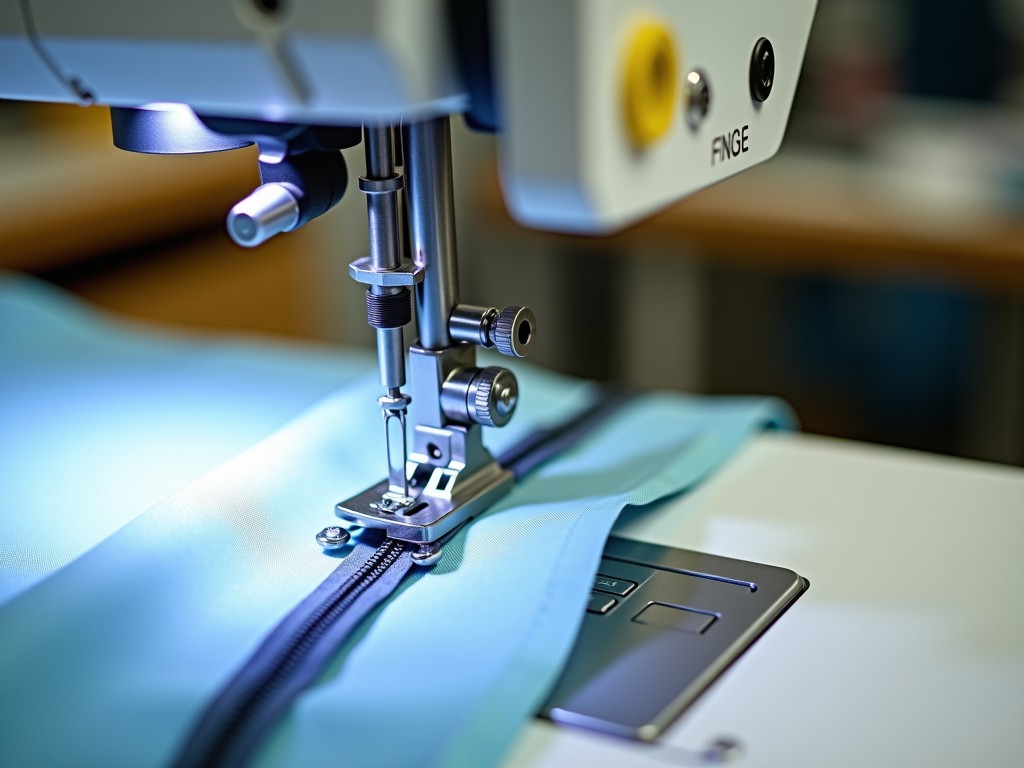
Invisible zipper tape sewing equipment attaches concealed zipper tapes to garment panels with precise stitch placement, keeping the zipper hidden after assembly. The needle bar synchronizes with a feed mechanism that maintains tape tension within ±0.2 mm, reducing rework in high‑volume apparel lines.
Technical Specifications
| Parameter | Typical Value |
|---|---|
| Maximum tape width | 12 mm |
| Stitch length range | 2.0 mm – 4.5 mm |
| Sewing speed | Up to 800 stitches/min |
| Needle system | DB×1, size 70/10 – 90/14 |
| Power requirement | 220 V ± 10 %, 50/60 Hz, 0.75 kW |
| Control interface | PLC with touchscreen, programmable stitch patterns |
Applications
The equipment serves outerwear, sportswear, and formal garment production where a clean, concealed zipper finish is required. By hiding the tape within the seam, visible top‑stitching is eliminated, improving appearance and reducing snag risk, especially on lightweight fabrics prone to puckering.
Customization Options
Suppliers adjust the machine for specific tape widths, needle gauges, and feed rates according to material specs. Common changes include swapping presser feet for different tape thicknesses, modifying tension dials for stretch‑able tapes, and adding laser guides for precise alignment. All modifications are recorded in the equipment’s configuration sheet.
Quality Control Philosophy
Each unit is tested for stitch consistency, tape feed accuracy, and motor vibration. Acceptance criteria: stitch length deviation ≤ 0.1 mm over a 100 mm seam, tape lateral shift ≤ 0.05 mm, and noise emission < 68 dB(A) at operating speed. Results are documented and shipped with the unit.
Frequently Asked Questions
-
Can the tape width be customized beyond the standard 12 mm?
Yes, the presser foot and feed mechanism can be adapted for tapes ranging from 6 mm to 20 mm upon request.
-
What information is required before a quotation is issued?
Typical inputs include garment type, tape material (polyester, nylon, cotton), desired stitch length, production volume, and any auxiliary features such as an automatic thread trimmer.
-
How is the equipment packaged for export?
Units are secured in wooden crates with foam padding, sealed with humidity‑indicating cards, and marked for upright transport. Documentation includes a packing list, CE declaration, and voltage compatibility label.
Contact for Technical Inquiry
To discuss specific requirements, request a detailed datasheet, or arrange a sample test, please reach out via the contact form.
Submit Inquiry