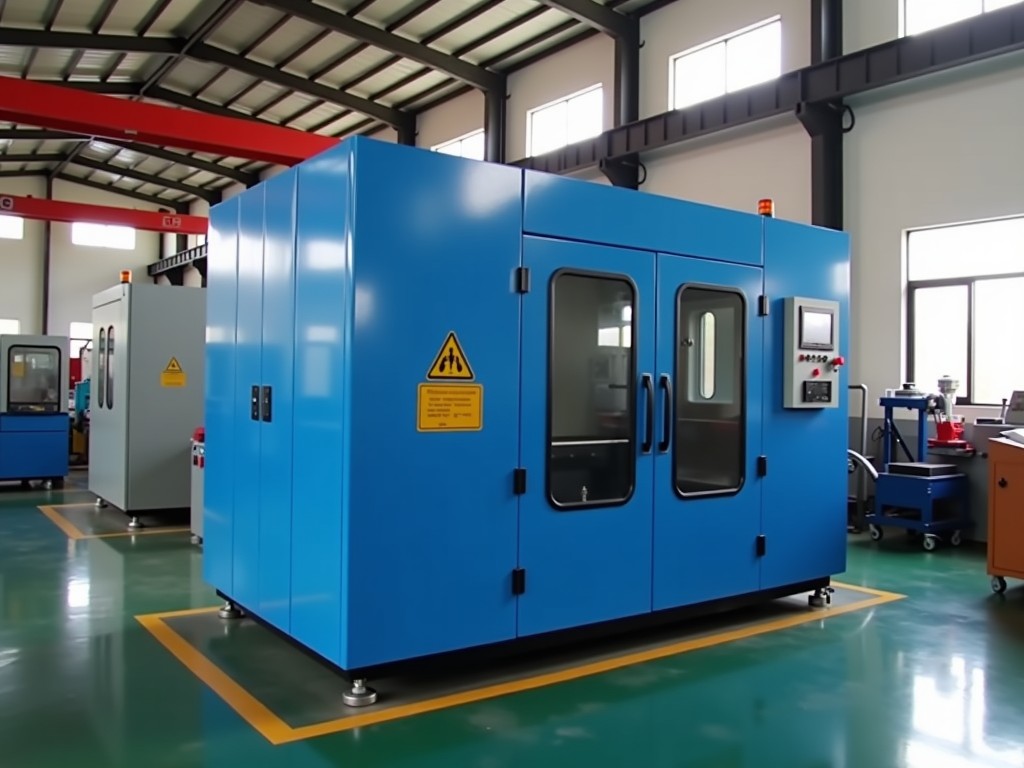
CE Certified Magnesium Hot Chamber Die Casting Machine
Introduction
Magnesium alloys are increasingly used for lightweight structural components in automotive, aerospace, and consumer electronics due to their low density (≈1.8 g/cm³) and high specific strength. Hot chamber die casting is the preferred process for magnesium because the metal’s low melting point (≈650 °C) and high reactivity with air necessitate a sealed injection system that keeps the alloy molten and protected from oxidation.
A CE‑marked machine indicates that the equipment satisfies the essential health and safety requirements of the EU Machinery Directive (2006/42/EC) and related directives, allowing legal placement on the European market and providing a baseline for global compliance.
Technical Overview
The machine consists of a furnace that maintains magnesium at the processing temperature, a gooseneck injection tube immersed in the molten metal, a hydraulic or servo‑driven plunger that forces the metal into the die, and a die clamping system that provides the required locking force during solidification.
Key process parameters include:
- Melting temperature: 640–680 °C (controlled within ±2 °C)
- Injection pressure: 300–700 bar (adjustable via valve)
- Shot weight: 0.02–0.5 kg depending on die size
- Clamping force: 250–1200 kN (selectable per model)
- Cycle time: 2–8 seconds (influenced by part thickness and cooling)
Key Engineering Characteristics
Instead of qualitative claims, the machine’s design is defined by measurable attributes that affect part quality and production cost:
- Temperature uniformity across the furnace: ±1.5 °C (ensures consistent viscosity)
- Plunger repeatability: ±0.02 mm shot position (reduces flash)
- Die cooling channel pressure drop: <0.1 bar (prevents hot spots)
- Hydraulic system efficiency: >85 % (lowers energy consumption per cycle)
- Control system response time: <10 ms (enables real‑time pressure feedback)
Applications
Magnesium hot chamber die casting is selected when weight reduction directly improves performance metrics such as fuel efficiency, payload capacity, or device portability. Typical parts include:
- Transmission housings and clutch plates for automotive powertrains
- Laptop and tablet frames requiring high stiffness‑to‑weight ratio
- Aerospace brackets and interior fixtures where corrosion resistance is essential
- Hand‑tool bodies and power‑tool housings that benefit from vibration damping
The process excels for thin‑walled geometries (<2 mm) that would be difficult to produce with cold‑ chamber methods due to magnesium’s rapid oxidation.
Typical Specification Table
| Parameter | Range / Typical Value | Note |
|---|---|---|
| Clamping Force | 250–1200 kN | Selected per die size |
| Shot Weight | 0.02–0.5 kg | Dependent on material density |
| Injection Pressure | 300–700 bar | Adjustable via relief valve |
| Melt Temperature | 640–680 °C | ±1.5 °C uniformity |
| Cycle Time | 2–8 s | Includes fill, solidify, ejection |
| Power Consumption | 5–15 kW (average) | Varies with cycle rate |
Quality Control & Certification
CE marking is obtained after a conformity assessment that includes:
- Risk assessment according to EN ISO 12100
- Verification of safety devices (emergency stop, guarding, pressure relief)
- Electromagnetic compatibility testing (EN 61000‑6‑2)
- Review of technical documentation and user manual
In‑process quality monitors typically involve:
- Real‑time temperature logging of the furnace (±0.5 °C accuracy)
- Pressure transducer feedback during injection (repeatability <1 % full scale)
- Die closure force measurement to confirm lock‑up before metal entry
- Visual and dimensional inspection of first‑article parts (CMM tolerance ±0.05 mm)
Customization Options
Machines can be adapted to specific production needs through the following configurable elements:
- Plunger diameter (10–40 mm) to match shot weight requirements
- Die height adjustment range (150–500 mm) for varying mold sizes
- Cooling circuit layout (number of channels, flow rate) tailored to part geometry
- Control interface (PLC‑based with optional HMI touchscreen or remote monitoring)
- Safety upgrades (light curtains, laser scanners, dual‑hand controls)
Frequently Asked Questions
Hot chamber design is specific to low‑melting‑point alloys; magnesium and zinc are compatible, while aluminum requires a cold‑ chamber system due to its higher melting point and reactivity.
Q: What information is needed to obtain a quotation?Typical data include part geometry (or die drawing), estimated annual volume, required shot weight, and any special features such as inserts or surface finishes.
Q: How is the CE certification verified?The manufacturer provides a Declaration of Conformity and the technical file; the CE mark is affixed after internal assessment and, if required, third‑party audit.
Q: What is the usual lead time for a standard machine?Lead time ranges from 10 to 16 weeks depending on configuration and current factory load.
Contact for Technical Inquiry
To discuss how a CE‑certified magnesium hot chamber die casting machine can meet your production specifications, please provide your project details via the inquiry form.
Send Inquiry