Zipper Top Stop Machine
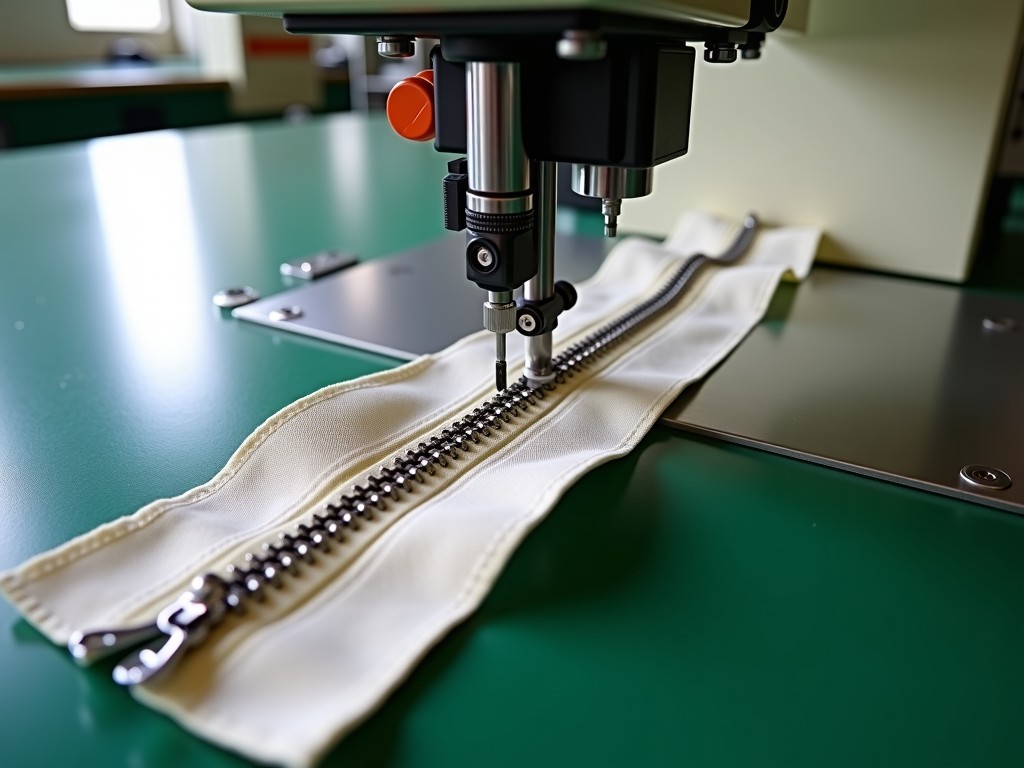
The zipper top stop machine forms the upper stop element on a continuous zipper chain, creating a mechanical barrier that prevents the slider from disengaging. It operates on a feed‑through principle where the zipper tape passes through a cutting and forming station that stamps a precise stop shape from a metal or polymer strip.
Working Principle
Zipper tape is fed at a controlled rate by a pair of synchronized rollers. A pneumatic or servo‑driven punch descends to cut a pre‑shaped stop blank from a feeding strip, while a forming die simultaneously bends the blank into the final hook geometry. The formed stop is then welded or crimped onto the tape, and the chain continues to the next station.
Technical Specifications
| Parameter | Typical Value | Notes |
|---|---|---|
| Maximum tape width | 10 mm | Accommodates #3 to #5 zipper coils |
| Stop length | 2.5 mm ±0.05 mm | Measured after forming |
| Production speed | Up to 180 cycles/min | Depends on material thickness |
| Power requirement | 1.5 kW (3‑phase, 380 V) | Includes motor and pneumatic supply |
| Control system | PLC with touch‑screen HMI | Recipe storage for different stop types |
Key Features
- Adjustable stop length via interchangeable forming dies (range 2.0 mm–3.5 mm)
- Quick‑change tape guide system for rapid coil size switching
- Integrated tension sensor maintains constant feed force within ±0.2 N
- Low‑noise operation (<70 dB) due to isolated drive housing
- Optional vision inspection module validates stop geometry in‑line
Applications
In apparel manufacturing, the top stop prevents slider pull‑off on garments subjected to repeated washing and stretching, directly affecting product lifespan. For luggage and outdoor gear, a robust stop resists impact forces that could otherwise cause chain failure under load. The machine’s ability to produce consistent stop dimensions reduces rework rates in high‑volume sewing lines.
Customization Options
- Alternative drive types: servo‑electric for energy‑saving or pneumatic for low‑cost retrofit
- Material feed options for brass, aluminum, or polymer stop blanks
- Extended tape width up to 15 mm for heavy‑duty zipper coils
- Integration kits for upstream lubrication and downstream cleaning stations
- Custom HMI language packs and remote diagnostics via Ethernet
Quality Control Philosophy
Each machine undergoes a functional test where a sample chain is run for 10 minutes and the stop pull‑off force is measured using a tensile tester; acceptance criterion is ≥15 N. Dimensional inspection is performed on a statistical sample of stops per batch using a coordinate measuring machine with a tolerance of ±0.03 mm. Documentation includes material certificates, calibration records, and a traceability tag affixed to the frame.
Frequently Asked Questions
Can the stop length be adjusted without changing tools?
Yes, the machine includes a micro‑adjustment screw on the forming die that allows fine tuning of length within ±0.2 mm while keeping the same die set.
What information is required for a quotation?
Please provide the zipper coil type (material and width), desired stop geometry (length, shape), production speed target, and any required optional modules (e.g., vision inspection).
Which materials are available for the stop blanks?
Standard offerings are brass (C36000), aluminum (6061), and UV‑stabilized polyester; other alloys can be quoted upon request.
How is quality inspected during production?
An optional vision system captures each stop’s profile and compares it to a CAD model; deviations beyond the set tolerance trigger a reject signal.
What packaging methods are available for export?
Machines are packed in wooden crates with internal foam blocking, sealed with polyethylene wrap, and marked with handling symbols; full container load (FCL) or less‑than‑container load (LCL) options are offered.
Contact Us
For detailed technical data, pricing, or to arrange a factory visit, please reach out to our sales engineering team.