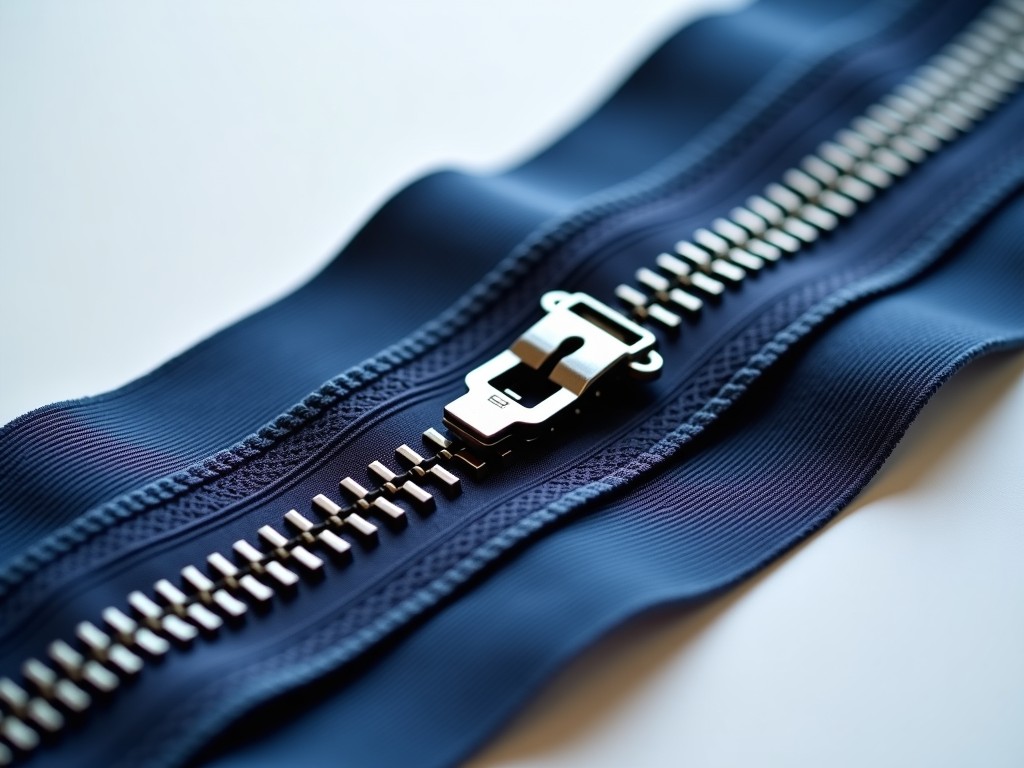
CE Certified Nylon Zipper Making Machinery
Nylon zipper production requires precise melting, shaping, and cutting of polyamide filaments to form continuous teeth and tape. The process demands tight control of temperature, pressure, and speed to achieve consistent tooth geometry and tape width.
CE marking indicates that the machinery complies with the essential health and safety requirements of the EU Machinery Directive 2006/42/EC, which involves a conformity assessment procedure, technical documentation, and optional third‑party verification. This certification facilitates market access within the European Economic Area and signals adherence to recognized safety standards.
Technical Overview
The core assembly consists of four synchronized subsystems: material feeding, heating and plastification, molding die, and cutting‑off mechanism. Each subsystem is driven by a servo‑controlled motor to enable precise timing and repeatable product dimensions.
- Feeding system: twin‑screw extruder with adjustable screw speed from 5 to 30 rpm, capable of handling nylon 6,6 granules with a melt flow index of 8–12 g/10 min.
- Heating zone: three‑stage barrel heater with independent PID control, maintaining temperatures between 240 °C and 280 °C ±2 °C.
- Molding die: interchangeable carbide‑tipped die set offering tooth pitches from 2.5 mm to 5.0 mm and tape widths from 3 mm to 12 mm.
- Cut‑off module: rotary shear with adjustable stroke length, producing zipper lengths up to 100 m per minute depending on die configuration.
- Control panel: IEC 61131‑3 compliant PLC with touchscreen HMI, storing up to 20 product recipes and providing real‑time monitoring of motor load, temperature, and line speed.
Key Engineering Features
Measurable characteristics that differentiate this equipment include energy consumption per meter of zipper produced, dimensional tolerance of the teeth, and maintenance interval for wear parts.
- Specific power consumption: 0.45 kWh per meter of finished zipper at nominal speed of 60 m/min.
- Tooth height tolerance: ±0.05 mm; tape width tolerance: ±0.10 mm, verified by laser micrometer sampling every 10 m.
- Wear‑part life: die inserts rated for 150 hours of continuous operation before re‑grinding; screw elements rated for 300 hours.
- Quick‑change tooling: die set can be swapped in under 8 minutes using a pneumatic locking system, minimizing downtime during product changeovers.
Applications in Textile Manufacturing
Nylon zippers are prevalent in outerwear, luggage, and sportswear due to their high abrasion resistance and low moisture absorption. The machinery’s ability to maintain consistent tooth geometry ensures reliable slider engagement, which is critical for products subjected to repeated flexing and loading cycles.
Additionally, the process accommodates filled nylon grades (e.g., glass‑reinforced PA6,6) that provide increased stiffness for technical applications such as automotive interior trim. The adjustable temperature profile enables processing of these higher‑melting‑point compounds without degradation.
Customization Options
Customization is driven by end‑product requirements such as tooth pitch, tape thickness, and integration with downstream operations like coating or printing.
- Die geometry: custom tooth profiles (e.g., concealed, invisible, or water‑repellent) achievable via CNC‑machined inserts.
- Speed regulation: variable frequency drive allowing line speeds from 10 m/min to 120 m/min with torque feedback for consistent melt pressure.
- Auxiliary modules: optional side‑branding unit for applying logos or reflective tape, and inline lubrication system for reducing friction during slider insertion.
- Control software: recipe management with barcode‑based product selection, enabling traceability for OEM quality audits.
Quality Control and Testing
Quality assurance follows a layered approach: in‑process monitoring, end‑of‑line inspection, and documentation for CE conformity.
- In‑process sensors: pressure transducers in the barrel and laser diameter sensors on the tape provide real‑time feedback to the PLC, triggering alarms if parameters deviate beyond preset limits.
- End‑of‑line testing: each batch undergoes tensile strength testing of the zipper chain (ASTM D2256) and slide‑force measurement (ISO 18185) to verify functional performance.
- Documentation: technical file includes risk assessment, design drawings, material safety data sheets, and test reports, which are reviewed during the CE marking audit.
Specification Table
| Parameter | Typical Value | Unit | Notes |
|---|---|---|---|
| Motor Power (Main Drive) | 7.5 | kW | Servo‑rated, continuous duty |
| Heating Zones | 3 | – | Independent PID control |
| Temperature Range | 240–280 | °C | ±2 °C stability |
| Tooth Pitch Options | 2.5–5.0 | mm | Interchangeable dies |
| Tape Width Range | 3–12 | mm | Adjustable guide |
| Maximum Line Speed | 120 | m/min | Dependent on die and material |
| Power Consumption | 0.45 | kWh/m | At 60 m/min nominal speed |
| CE Conformity | Yes | – | Machinery Directive 2006/42/EC |
Frequently Asked Questions
Can the machine be adapted for polyester or other thermoplastic tapes?
Yes. By changing the heating profile and selecting a suitable die material, the equipment can process polyester (PET), polypropylene (PP), or thermoplastic polyurethane (TPU) tapes. Adjustments are typically limited to temperature setpoints and screw speed.
What information is required before a quotation can be issued?
We need the desired tooth pitch, tape width, target production speed, material grade, and any auxiliary functions (e.g., side branding, lubrication). Providing a sample or detailed drawing helps finalize the die design.
How is quality inspected during a production run?
In‑line laser diameter sensors monitor tape thickness, while pressure transducers verify melt pressure. Periodic off‑line sampling is performed for tensile strength and slide‑force testing according to ISO standards.
What packaging methods are available for shipping the machinery?
The unit is shipped on a sturdy steel frame with corrosion‑resistant coating, wrapped in shrink‑film, and secured within a wooden crate. Optional foam cushioning and humidity‑controlled desiccant packs are available upon request.
What is the typical production lead time?
Lead time ranges from 8 to 12 weeks for standard configurations, depending on die complexity and current factory load. Expedited schedules can be discussed for critical projects.
Contact for Technical Inquiry
For detailed specifications, customization discussions, or to arrange a virtual demonstration, please reach out to our engineering team. We will provide a tailored response based on your application requirements.