Industrial Nylon Zipper Machine – Supplier Overview
This page describes the technical capabilities of a China‑based supplier that manufactures machines for producing nylon zipper chains. The information focuses on measurable specifications, material compatibility, and production considerations that help engineers evaluate suitability for high‑volume zipper manufacturing.
Machine Configuration and Technical Specifications
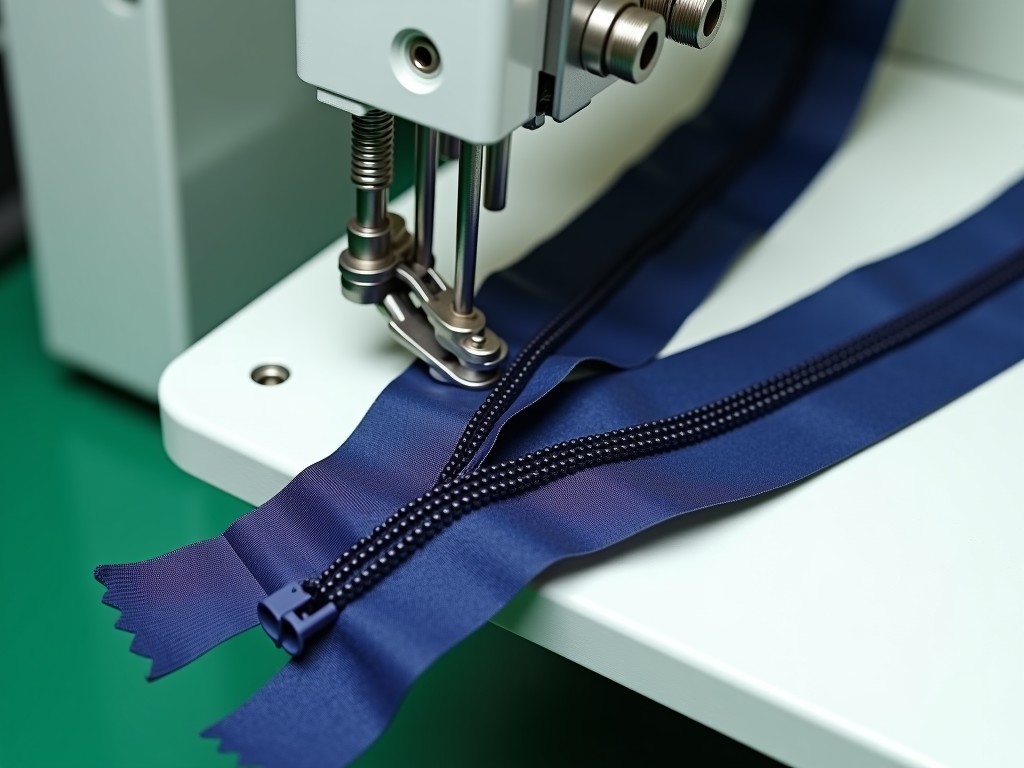
The core unit is a single‑needle, interlock‑stitch zipper forming machine designed for continuous operation with nylon monofilament yarn. It integrates a tension‑controlled feed system, a heating element for yarn pre‑treatment, and a programmable cutter for precise tooth length.
| Parameter | Typical Value | Notes |
|---|---|---|
| Maximum Production Speed | 120 m/min | Dependent on yarn denier and tooth pitch |
| Yarn Denier Range | 70 – 200 dtex | Nylon 6,6 or nylon 6 |
| Tooth Pitch Options | 3.0 mm, 3.5 mm, 4.0 mm | Changeable via gear set |
| Heating Zone Temperature | 180 – 220 °C | PID controlled, ±2 °C stability |
| Power Consumption | 4.5 kW | Three‑phase 380 V, 50 Hz |
| Machine Footprint (L×W×H) | 2100 mm × 950 mm × 1800 mm | Includes control cabinet |
Key Functional Characteristics
The machine employs a rotary looper mechanism that ensures consistent loop formation, reducing tooth misalignment to less than 0.05 mm over a 10‑meter run. A servo‑driven cutter provides tooth length tolerance of ±0.02 mm, which is critical for zipper chain strength.
Lubrication points are sealed with PTFE‑filled grease cartridges, extending maintenance intervals to 500 operating hours. The control panel uses a PLC with touchscreen interface, storing up to 20 product recipes for quick changeover.
Typical Applications in Zipper Production
- Continuous filament nylon zipper chains for apparel, where high tensile strength (>30 N per tooth) is required.
- Coil‑type zippers for luggage and outdoor gear, benefiting from the machine’s ability to produce uniform pitch over long lengths.
- Water‑repellent treated nylon zippers, as the heating zone can activate specialty coatings without degrading yarn integrity.
Customization Options
The supplier offers modular adjustments to accommodate specific yarn types or product requirements. Changes are limited to mechanical subsystems that do not affect the core control architecture.
- Alternative gear ratios for tooth pitches from 2.5 mm to 5.0 mm.
- Optional side‑feed device for attaching tape or reinforcement ribbon during zipper formation.
- Extended cooling section (additional 300 mm) for high‑speed runs with low‑melting‑point nylon blends.
- Custom control software integration for MES data exchange via OPC‑UA.
Quality Control and Testing Philosophy
Each machine undergoes a 48‑hour endurance test at 80 % of rated speed, monitoring loop consistency, cutter wear, and temperature stability. Acceptance criteria include a maximum tooth length deviation of 0.03 mm and a yarn break rate below 0.02 % per kilometre.
Before shipment, the supplier provides a test certificate summarizing speed, tension, and dimensional data. Spare parts kits include wear‑prone items such as looper hooks, cutter blades, and tension discs, each with defined replacement intervals based on operational hours.
Frequently Asked Questions
- Can the machine process recycled nylon yarn? Yes, provided the yarn meets the specified denier and moisture content (<0.02 %). Pre‑drying may be required.
- What information is needed for a quotation? Required details include target tooth pitch, yarn denier, desired production speed, and any auxiliary modules (e.g., side‑feed, cooling extension).
- How are machines protected during overseas shipment? Units are sealed in vapor‑barrier film, placed in shock‑absorbent crates, and secured with steel straps. Corner protectors and humidity indicators are included.
- What is the typical lead time? Standard configuration ships within 6‑8 weeks after receipt of purchase order; customized builds add 2‑4 weeks depending on module complexity.
For detailed technical datasheets, sample request procedures, or to discuss application‑specific adaptations, please contact the supplier’s engineering team.
Request Technical Consultation