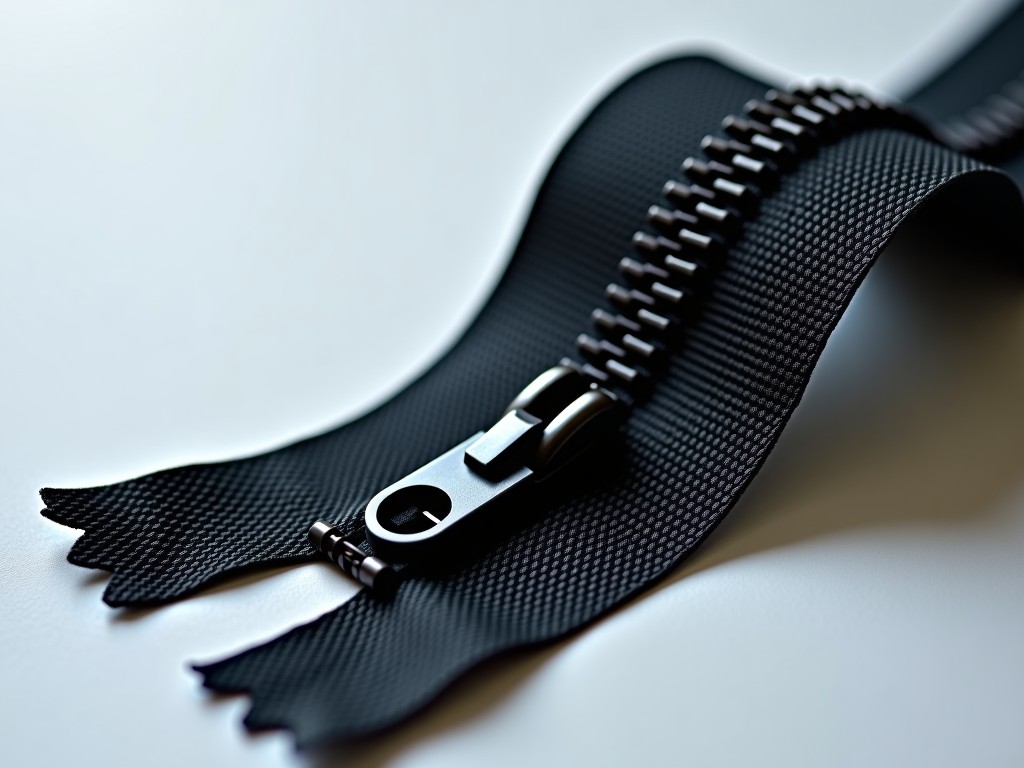
Custom Complete Nylon Zipper Factory Setup Supplier
A complete nylon zipper factory setup encompasses the machinery, tooling, auxiliary systems, and process controls required to transform nylon resin into finished zipper tape, teeth, and sliders at scale. The following sections detail the technical elements that define such a setup, focusing on measurable characteristics rather than promotional claims.
Core Equipment Overview
The primary line begins with a resin drying system that reduces moisture content to below 0.02 % to prevent hydrolysis during melt processing. A single‑screw extruder with a barrel diameter of 45 mm and L/D ratio of 25:1 delivers a melt output ranging from 80 kg/h to 120 kg/h depending on resin grade and screw configuration. The extruder feeds a cooling calibrator that shapes the nascent tape to a nominal width of 20 mm to 50 mm with a tolerance of ±0.1 mm.
Downstream, a series of precision forming stations create the zipper teeth. Intermeshing molding cavities, typically machined from hardened tool steel, produce tooth profiles such as coil, invisible, or metal‑reinforced types at speeds up to 150 m/min. A slider insertion unit places pre‑formed sliders onto the tape with positional accuracy within ±0.2 mm, followed by a winding system that rolls the finished tape onto cores with adjustable tension from 0.5 N to 2.0 N.
Auxiliary equipment includes a centralized control cabinet with PLC logic, real‑time sensors for melt pressure, temperature, and line speed, and a scrap recovery system that regrinds off‑spec tape for reuse. All modules are mounted on a modular steel frame designed for quick changeover between different zipper specifications.
Technical Specifications
| Machine/Unit | Typical Parameter | Customizable Range | Notes |
|---|---|---|---|
| Resin Dryer | Dew point –40 °C | –30 °C to –50 °C | Desiccant type selectable |
| Extruder | Output 100 kg/h (PA6) | 80 – 150 kg/h | Screw L/D 20‑30 |
| Cooling Calibrator | Tape width 30 mm | 20 mm – 60 mm | Adjustable calibration gaps |
| Tooth Forming Mold | Coil pitch 0.5 mm | 0.3 mm – 0.8 mm | Tool steel HRC 58‑62 |
| Slider Inserter | Placement accuracy ±0.2 mm | ±0.1 mm – ±0.5 mm | Vision‑guided option |
| Winder | Tension 1.0 N | 0.5 N – 3.0 N | Core diameter 76 mm – 152 mm |
Material Options
The base polymer can be selected from common nylon grades: PA6 (melting point ≈215 °C, moisture absorption 2.5 %), PA66 (melting point ≈255 °C, moisture absorption 1.8 %), or PA12 (melting point ≈178 °C, moisture absorption 0.9 %). Each grade influences the mechanical stiffness, chemical resistance, and processing window of the final zipper.
Additives such as UV stabilizers (typical loading 0.2 % wt), anti‑static agents (0.1 % wt), and color masterbatches (up to 5 % wt) can be fed via gravimetric dosing units. The color tolerance is controllable to ΔE < 2 under standard D65 lighting, allowing close matching to corporate palettes.
Regrind content from the scrap recovery system can be blended up to 30 % wt without degrading tensile strength below 45 MPa, provided the regrind particle size is kept under 2 mm.
Customization Logic
Zipper geometry is defined by three interdependent variables: tape width, tooth pitch, and tape thickness. For a given application, the tape width is chosen first based on the required seam allowance (commonly 10 mm – 40 mm). The tooth pitch is then selected to achieve the desired locking force; a finer pitch (0.3 mm) yields higher interlock density suitable for high‑stress luggage, while a coarser pitch (0.7 mm) reduces zipper flex resistance for flexible sportswear.
Tape thickness, typically ranging from 0.20 mm to 0.40 mm, influences both flexibility and abrasion resistance. Thinner tapes (<0.25 mm) are preferred for lightweight apparel, whereas thicker tapes (>0.35 mm) provide extra durability for industrial covers.
Slider type—such as pin lock, non‑lock, or reversible—can be interchanged without altering the tape line, as the insertion module accommodates multiple slider geometries with changeover times under 15 minutes.
Applications
In apparel manufacturing, nylon zippers offer a low‑temperature melting point that enables bonding with polyester or cotton tapes without degrading the fabric, a critical factor for seamless integration in sports jerseys and outerwear.
For luggage and travel gear, the high abrasion resistance of PA66‑based teeth, combined with a reinforced slider, withstands repeated loading cycles exceeding 5,000 pulls, meeting industry durability standards.
Automotive interior trim utilizes nylon zippers with UV‑stabilized resin to retain colorfastness under prolonged sun exposure, while the low moisture absorption prevents swelling in humid climates.
In technical textiles such as parachute harnesses or safety belts, the high tensile strength of the tape (≥55 MPa) and the consistent tooth geometry ensure reliable load transfer under dynamic forces.
Quality Control & Testing
In‑line monitoring includes laser diameter gauges that verify tape width at 100 Hz, with automatic feedback to the extruder speed to maintain tolerance. Melt pressure transducers detect variations that could indicate resin degradation or blockage.
Tensile testing of sampled tape strips is performed every 30 minutes using a universal testing machine at 200 mm/min crosshead speed; results are logged for statistical process control. Color verification is conducted with a spectroradiometer calibrated against a reference tile, ensuring ΔE remains within specification.
Visual inspection stations equipped with 20× magnification lenses identify surface defects such as pits, streaks, or misaligned teeth. Defective sections are automatically diverted to a rework loop where the tape can be reground and reprocessed.
Production Lead Time & Packaging
Typical lead time for a fully configured line, including factory acceptance testing, ranges from 12 to 16 weeks after receipt of the technical datasheet and approved layout. This interval accounts for machining of custom tooling, electrical integration, and calibration runs.
Finished zipper tape is wound onto corrugated cores and wrapped in low‑density polyethylene film with a thickness of 50 µm to protect against moisture and dust. The rolls are then placed in wooden pallets with corner protectors and secured with polyester strapping rated for 500 kg load capacity, suitable for containerized export.
Frequently Asked Questions
- Can dimensions be customized? Yes, tape width, tooth pitch, and thickness are adjustable within the ranges specified in the technical table; custom tooling is quoted per project.
- What information is required before quotation? Required data include target zipper type (coil, invisible, metal), tape width range, expected production volume (meters per shift), resin grade preferences, and any specific certification needs (e.g., OEKO‑TOX, REACH).
- What materials are available? Standard offerings are PA6, PA66, PA12 with optional UV stabilizers, anti‑static agents, and color masterbatches; alternative engineering polymers are available upon request.
- How is quality inspected? Quality control combines in‑line laser gauges, melt pressure sensors, periodic tensile testing, spectroradiometric color checks, and 20× visual inspection stations as described in the QC section.
Next Steps
To discuss a tailored nylon zipper factory setup, provide your technical requirements and we will prepare a detailed proposal including layout drawings, equipment list, lead time, and commercial terms.