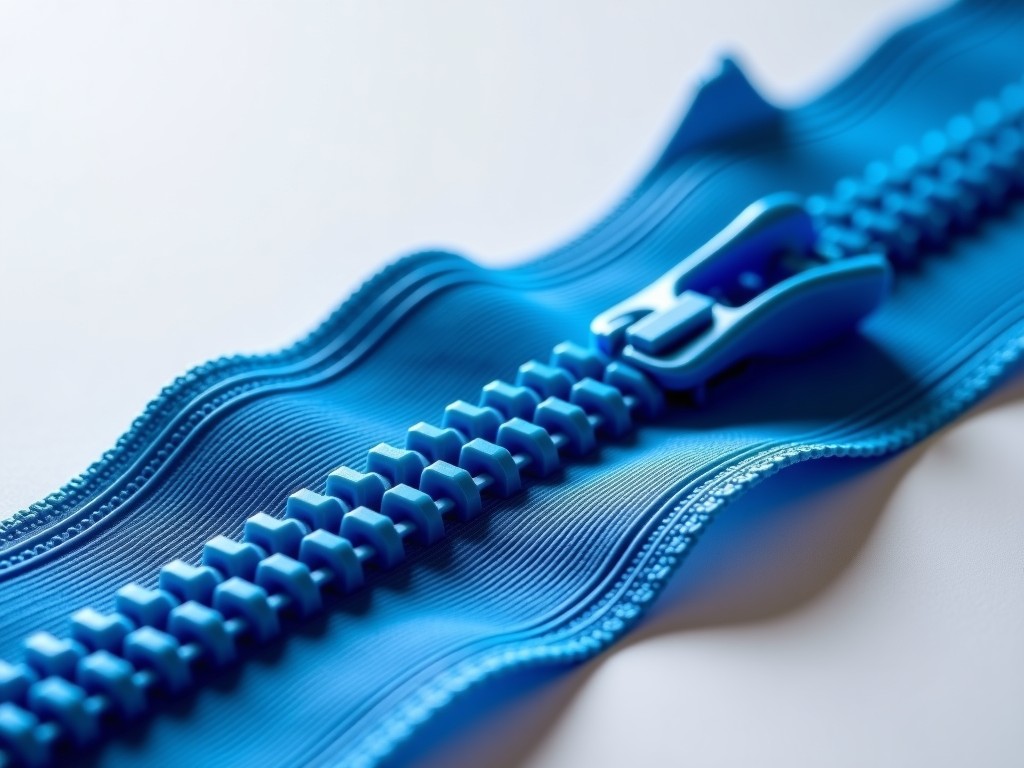
Plastic Molded Zipper Machinery – Technical Overview
This machinery performs the injection molding of zipper elements such as teeth, pulls, and tapes from thermoplastic resins. The process involves melting polymer pellets, injecting the melt into precision cavities, and cooling to form the final zipper components.
Machine Working Principle
Granular resin is fed into a heated barrel where a reciprocating screw plastifies the material. The screw then acts as a plunger, delivering a measured shot into a closed mold cavity at controlled pressure.
After filling, the mold remains closed while the part cools, then opens for ejection. Cycle time depends on part thickness and material thermal properties; typical values range from 8 to 18 seconds for standard zipper teeth molds.
Key Technical Specifications
| Parameter | Typical Range / Value | Remarks |
|---|---|---|
| Clamp Force | 150 – 300 kN | Selected based on projected parting line area |
| Injection Capacity (shot size) | 20 – 120 cm³ | Adjustable via screw diameter and stroke |
| Molding Temperature (barrel) | 180 – 260 °C | Depends on resin (POM, PP, PE, etc.) |
| Clamp Stroke | 200 – 350 mm | Determines maximum mold height |
| Motor Power (hydraulic/electric) | 7.5 – 22 kW | Electric drives offer lower energy consumption |
| Overall Dimensions (L×W×H) | 1.8 – 2.5 m × 0.9 – 1.2 m × 1.5 – 2.0 m | Footprint varies with machine tonnage |
Applications in Zipper Production
The machine produces discrete zipper elements that are later assembled into continuous chains. By molding teeth directly, manufacturers eliminate secondary machining steps, reducing labor and material waste.
The process also enables complex geometries such as locked‑in pulls or coated tapes that are difficult to achieve with extrusion. Typical resins include polyoxymethylene (POM) for high wear resistance, polypropylene (PP) for cost‑sensitive applications, and thermoplastic elastomers (TPE) for soft‑touch pulls. Material selection influences melt flow rate, shrinkage, and required molding pressure.
Customization Options
- Mold cavity configuration – single‑impression for high volume, multi‑impression for flexibility.
- Shot size adjustment via interchangeable screws or adjustable stroke.
- Clamp force modules – hydraulic toggle or electric servo‑drive.
- Temperature control zones – independent barrel zones for gradient heating.
- Ejection systems – pneumatic pins, stripper plates, or robotic take‑away.
Quality Control & Testing
Each production run includes in‑process monitoring of melt temperature, injection pressure, and clamp force. Finished parts are inspected for dimensional tolerances (typically ±0.02 mm on tooth pitch), visual surface defects, and mechanical properties such as tensile strength of the pull.
Statistical process control (SPC) charts track key variables; corrective actions are triggered when measurements exceed predefined control limits. Mold maintenance schedules are based on shot count to prevent wear‑related flash or short shots.
Frequently Asked Questions
- Can the mold be customized for different zipper sizes? Yes, mold cavities are designed per customer specifications; tooth width, pitch, and profile can be altered within the machine’s clamping capacity.
- What information is required before quotation? Part drawings or 3D models, target material, annual volume, and any special requirements such as coating or over‑molding.
- Which materials are available for molding? Commonly used resins include POM, PP, PE, ABS, and TPE; engineering grades are available upon request.
- How is quality inspected? In‑process sensors monitor pressure and temperature; final inspection uses gauges, vision systems, and mechanical testing per ISO 9001‑based procedures.
- What packaging methods are available? Parts are packed in anti‑static trays, corrugated cartons, or palletized with stretch film, depending on destination and handling needs.
- What is the typical production lead time? Tooling lead time ranges from 4 to 6 weeks; machine delivery is typically 8 to 12 weeks after order confirmation.
Contact for Inquiry
To discuss your specific zipper molding requirements, request a detailed quotation, or arrange a technical consultation, please use the inquiry form below.