Custom Plastic Resin Zipper Machine Manufacturer
The core process involves melting thermoplastic resin in a single‑screw extruder, pressurizing the melt through a precision die that shapes the zipper tape and teeth simultaneously, then cooling the extruded profile in a water‑bath or air‑knife system to lock in dimensions.
Operating Principles
Material feeding starts with a gravimetric feeder that maintains a constant mass flow rate, typically within ±0.5% of the setpoint, ensuring consistent melt viscosity.
The extruder barrel is divided into three temperature zones; each zone is controlled by PID loops with a tolerance of ±1°C, which prevents degradation of heat‑sensitive resins such as TPU or TPE.
After shaping, the zipper tape passes through a set of calibrated rollers that adjust tape width and tooth height before entering the cooling section, where residence time is adjustable from 2 to 6 seconds depending on line speed.
Key Technical Parameters
| Parameter | Typical Range | Notes |
|---|---|---|
| Zipper tape width | 3 mm – 25 mm | Custom dies available for wider profiles |
| Extrusion output | 0.8 kg/h – 4.5 kg/h | Dependent on screw diameter and resin melt flow index |
| Temperature control tolerance | ±1 °C per zone | PID control with thermocouple feedback |
| Installed power | 4 kW – 12 kW | Includes drive, heating, and auxiliary units |
| Machine footprint (L×W×H) | 1800 mm × 900 mm × 1500 mm | Base frame includes vibration isolation pads |
| Weight | 650 kg – 950 kg | Varies with optional accessories |
Customization Options
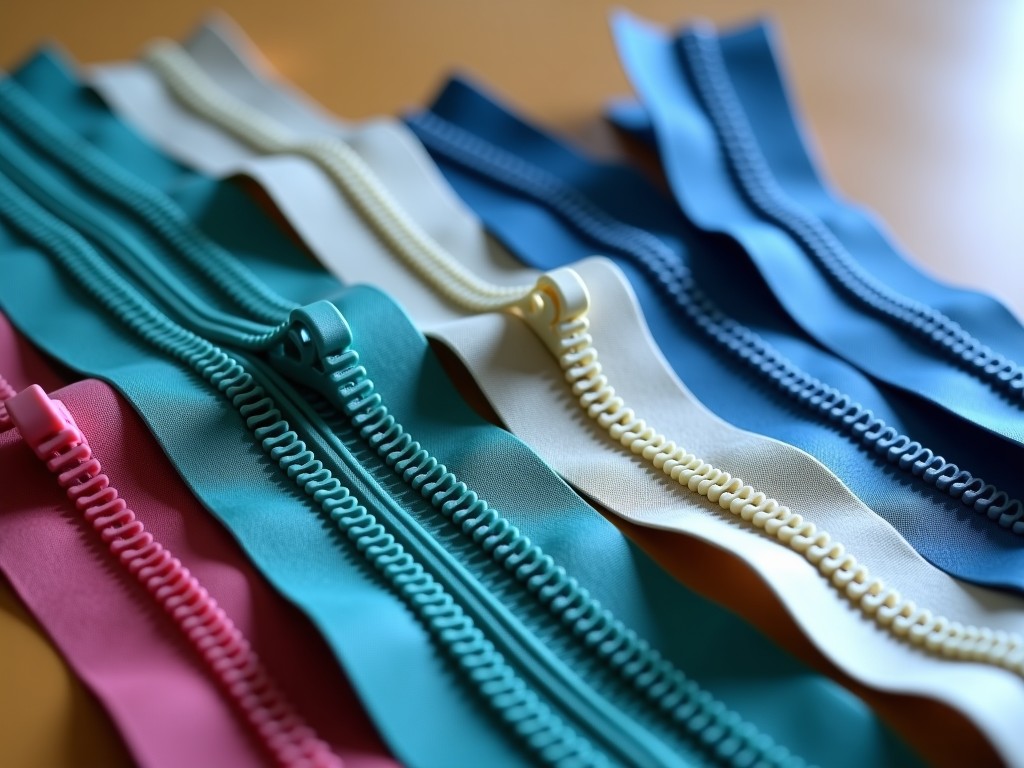
- Die geometry – interchangeable profiles for coil, invisible, or metal‑teeth zippers
- Screw design – barrier, mixing, or low‑shear screws tailored to resin rheology
- Cooling method – water‑bath, air‑knife, or hybrid system with adjustable flow rates
- Downstream equipment – cutting, winding, or printing stations can be integrated inline
Industrial Applications
In automotive interior manufacturing, zipper tapes produced by these machines are used for seat‑cover closures where resistance to UV exposure and repeated flexing is required; the ability to process TPU blends provides the necessary elasticity and durability.
For outdoor gear, such as tents and backpacks, the machines can run polyester‑based resins with added stabilizers, delivering tapes that retain strength after prolonged exposure to moisture and temperature cycling.
Medical device suppliers utilize the equipment to produce sterile‑grade zipper closures for fluid‑containing pouches; the extruder’s clean‑in‑place compatibility and low‑degradation processing preserve biocompatibility of medical‑grade polymers.
Quality Control and Testing
Each production run includes inline laser measurement of tape width and tooth pitch, with feedback to the extruder speed to maintain tolerances within ±0.05 mm.
Samples are cut and subjected to tensile testing according to ASTM D882; typical break strength values range from 12 MPa to 28 MPa depending on resin formulation.
Visual inspection stations check for surface defects such as melt fracture or die lines; any deviation triggers an automatic reject gate.
FAQ
Can the machine be adapted for multi‑layer zipper tapes?
Yes, a co‑extrusion setup can be added, allowing two or more resins to be layered in the die for functional gradients such as a soft outer skin and a rigid core.
What information is required for a quotation?
Required details include target zipper width, resin type, desired line speed, and any post‑extrusion operations such as cutting or printing.
How are spare parts managed?
Critical wear items such as screws, barrels, and die plates are stocked with standard lead times of 2–4 weeks; customized components are quoted per drawing.
Contact for Technical Inquiry
To discuss your specific resin zipper production needs, request a detailed quotation and we will provide a configuration sheet with layout drawings and utility requirements.