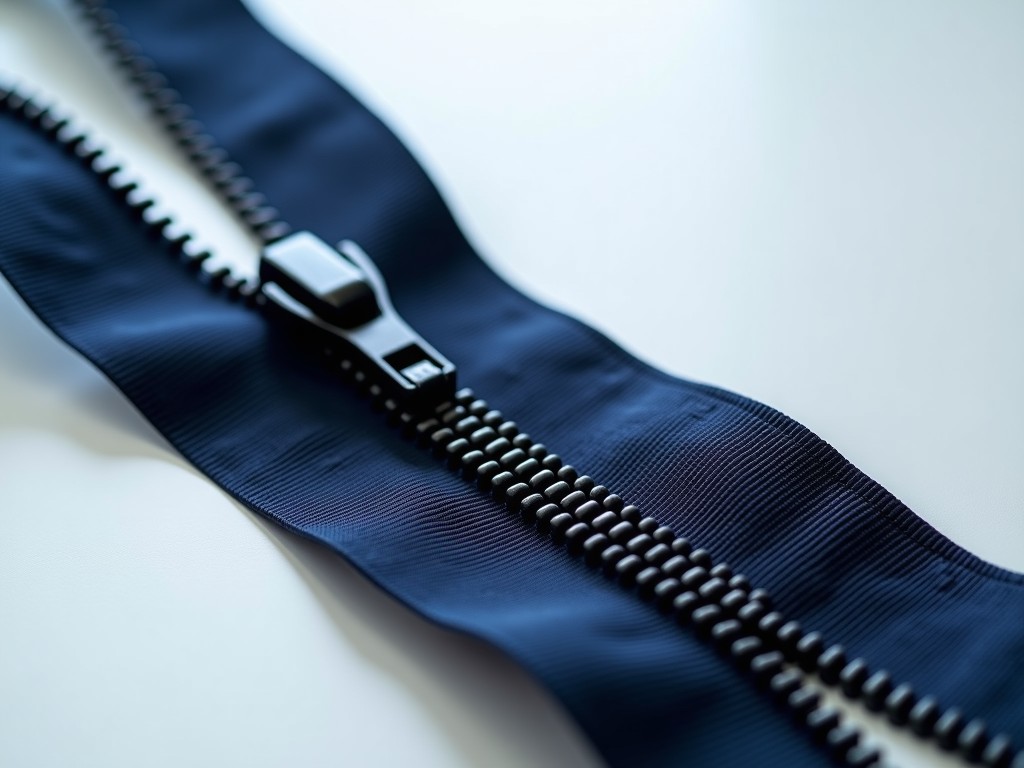
OEM High Quality Plastic Zipper Production Line
This production line integrates extrusion molding, zipper teeth formation, tape winding, and inline inspection into a continuous process. It is designed to produce plastic zipper chains of various widths and profiles directly from polymer granules. The system enables manufacturers to convert raw material into finished zipper tape without intermediate handling.
Core Modules and Their Functions
The line consists of five primary modules: a twin‑screw extruder, a zipper tooth forming die, a tape winding unit, a lubrication/cooling station, and a vision‑based inspection system. The extruder melts and homogenizes the polymer at a controlled temperature profile, delivering a melt flow rate suitable for precise die filling. The forming die shapes the interlocking teeth and tape edges in a single pass, eliminating secondary machining.
After forming, the tape is guided through a lubrication module that applies a microscopic coating to reduce friction during subsequent garment assembly. The winding module collects the finished zipper tape onto spools with adjustable tension to prevent deformation. Finally, the inspection station uses laser dimensional sensors and high‑speed cameras to verify tooth pitch, tape width, and surface finish at line speed.
Typical Applications
- Apparel manufacturing where lightweight, corrosion‑resistant zippers are required for jackets, sportswear, and outdoor gear.
- Luggage and bag production needing high‑strength tooth interlocking for repeated opening cycles.
- Automotive interior components such as seat covers and door panels where UV‑stable polymers are specified.
- Medical device accessories requiring sterile, non‑metallic fasteners with consistent dimensions.
Technical Specifications (Typical Values)
| Module | Function | Typical Range | Customizable According to Project |
|---|---|---|---|
| Twin‑screw Extruder | Melting and homogenizing polymer | Output 200–800 kg/h; Melt temperature 180–230 °C | Screw diameter, L/D ratio, temperature zones |
| Forming Die | Shaping zipper teeth and tape edges | Tooth pitch 3.0–5.0 mm; Tape width 5–20 mm | Die geometry, tooth profile, width adjustment |
| Winding Unit | Spooling finished tape | Spool diameter up to 300 mm; Tension 0.5–5 N | Spool size, tension control, speed synchronization |
| Inspection Station | Dimensional and surface verification | Pitch tolerance ±0.05 mm; Width tolerance ±0.1 mm | Sensor type, sampling rate, reject mechanism |
Customization Options
The line can be adapted to different polymer families such as polyoxymethylene (POM), polyester‑based thermoplastic elastomers, or nylon blends, each requiring specific melt temperature and screw configuration. Adjustable die inserts allow producers to switch between coil‑type, invisible, or metal‑tooth‑simulating zipper profiles without changing the entire extrusion unit. Production speed can be tuned from 30 to 120 m/min by modifying the pull‑off gear ratio and cooling capacity, enabling alignment with downstream garment line rates.
Additional options include side‑feeding stations for adding reflective tapes or RFID filaments, and modular length extensions for higher output or for integrating post‑curing stations when using heat‑stable polymers.
Quality Assurance Approach
Quality is monitored at three points: melt pressure sensors in the extruder detect deviations that could cause inconsistent tooth formation; the vision inspection station measures each tooth’s geometry and flags out‑of‑tolerance units for automatic diversion; and a tensile tester performs spot checks on finished tape to verify peel strength meets the specified range (typically 12–25 N per 25 mm width). Data from these sensors are logged for statistical process control, allowing traceability back to material lot and production shift.
Routine maintenance intervals are defined by operating hours rather than calendar time, with wear‑parts such as die tips and winding bearings monitored via vibration analysis to predict replacement before failure.
Frequently Asked Questions
Q: Can the line produce zippers with custom tooth shapes?
A: Yes. The forming die is designed for quick‑change inserts, allowing geometries such as concealed, water‑resistant, or reinforced profiles to be machined to drawing specifications.
Q: What information is needed to prepare a quotation?
A: Required details include target polymer type, desired zipper width and tooth pitch, production speed, and any additional features such as lubrication coating or side‑feed options.
Q: How is the line integrated into an existing factory layout?
A: The system is supplied as modular sections with standard flange connections, enabling placement alongside existing conveyors or cutting tables. Layout drawings are provided during the engineering phase.
Get Started
To discuss how this production line can be configured for your specific zipper specifications, contact our technical team for a detailed feasibility review.