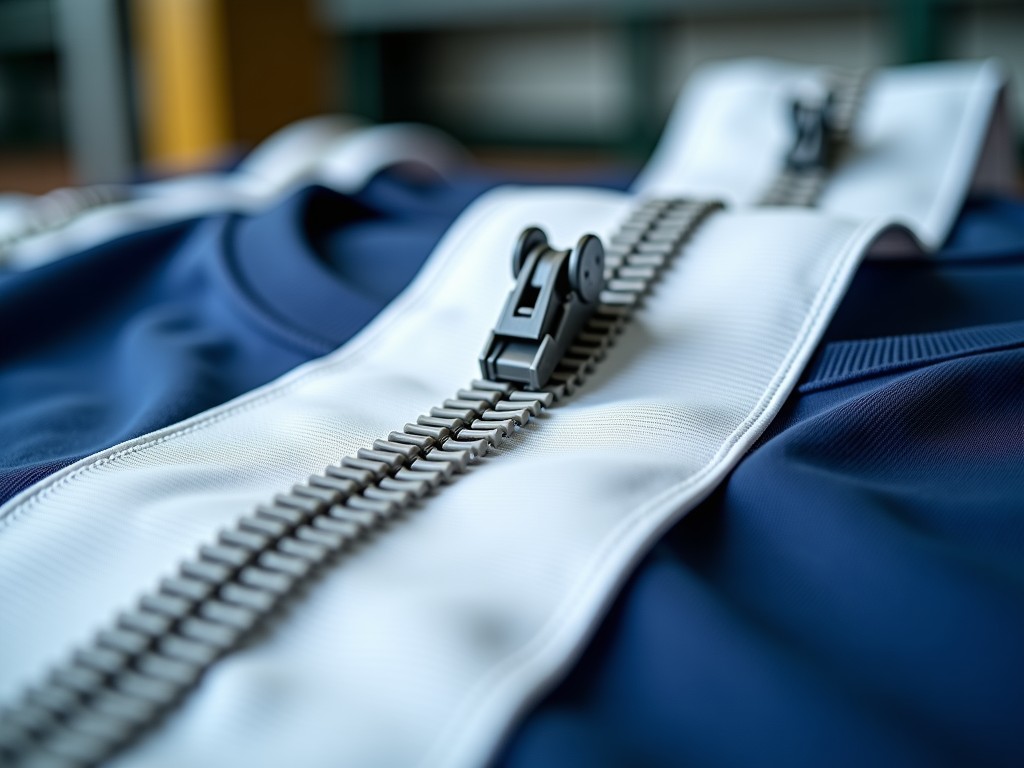
OEM Plastic Zipper Machine for Sportswear and Tents Factory
The machine forms continuous plastic zipper chains by interlocking molded teeth on a moving carrier tape.
It handles polyester, nylon, or polypropylene tapes with tooth widths from 3 mm to 10 mm and operates at speeds up to 120 m/min.
Working Principle
During operation, the tape is fed from a supply roll through a tensioning unit that maintains consistent pull force.
A heating station softens the tape surface, allowing the molding cavity to shape each tooth precisely.
After forming, a cooling section solidifies the teeth before the chain is wound onto a take‑up spool.
Key Technical Specifications
| Parameter | Typical Value | Unit |
|---|---|---|
| Maximum tape width | 50 | mm |
| Tooth pitch range | 3–10 | mm |
| Production speed | 30–120 | m/min |
| Motor power | 5.5 | kW |
| Control system | PLC with touchscreen | – |
Applications in Sportswear and Tents
Sportswear manufacturers use the machine to produce waterproof zipper chains for jackets, pants, and gear bags where flexibility and abrasion resistance are critical.
Tent fabricators require continuous coil zippers that maintain sealing performance under UV exposure and repeated flexing; the machine’s adjustable tooth geometry meets those demands.
Because the process operates without lubricants, the output chains are clean‑room compatible, reducing post‑processing steps for laminated fabrics.
Customization Options
- Interchangeable molding cavities for different tooth profiles (invisible, coil, reverse).
- Variable tape tension modules to accommodate thin nylon or heavy‑duty polyester.
- Optional side‑welding unit for attaching reflective tapes or reinforcement loops directly during zipper formation.
- Adjustable cooling length to suit thicker tapes or high‑speed runs.
Quality Assurance Approach
Each production run includes inline measurement of tooth height and pitch using laser sensors; deviations trigger automatic tape tension correction.
Finished chains undergo tensile testing to verify that the interlock strength exceeds 15 N per tooth, a benchmark for outdoor gear.
Visual inspection stations check for flash, misalignment, or surface defects; any rejected length is diverted to a scrap reel before winding.
Frequently Asked Questions
Can the machine be integrated into an existing production line?
Yes, the frame width and drive shaft height are adjustable; mounting brackets allow synchronization with upstream tape unwinders and downstream winding stations.
What information is needed for a quotation?
Required details include tape material, width, tooth pitch, desired speed, and any additional modules such as side‑welding or length counting.
How are spare parts managed?
Critical wear items (molding cavities, heating bands, cooling rollers) are stocked as standardized kits; lead time for replacement is typically two weeks.