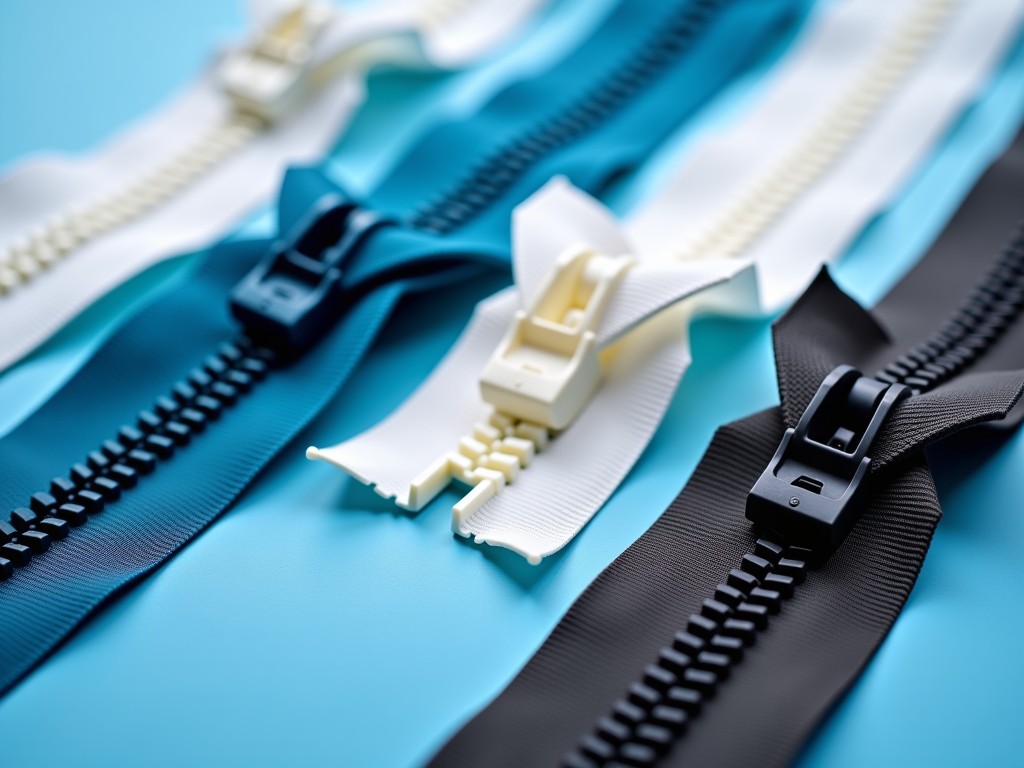
Wholesale Industrial Plastic Zipper Equipment Supplier
Plastic zipper production relies on coordinated extrusion, molding, and assembly systems that transform polymer granules into continuous coil zipper tapes. Understanding the mechanical and thermal requirements of each stage helps buyers evaluate supplier capabilities and align equipment with product specifications.
Core Technical Characteristics
Typical lines integrate a single‑screw extruder capable of processing polypropylene, polyethylene, or thermoplastic elastomers at melt temperatures between 180 °C and 230 °C, with output rates ranging from 30 kg/h to 120 kg/h depending on screw diameter and L/D ratio.
Downstream molding stations shape the extruded tape into interlocking teeth using precision‑machined cavities; tooth pitch commonly falls between 3 mm and 5 mm, while tooth height is controlled within ±0.05 mm to ensure consistent slider engagement.
Take‑up units maintain constant tension, typically set between 0.5 N and 2.0 N, to prevent tape deformation during cooling, and integrated sensors monitor width variation within ±0.1 mm across the coil length.
Why These Systems Suit Specific Industries
- Apparel manufacturers benefit from low‑profile coil designs that reduce bulk in seams while maintaining tensile strength above 15 N/mm.
- Automotive interior suppliers require UV‑stabilized polymers; extrusion lines can incorporate additive feeders achieving <5 % color shift after 500 h UV exposure.
- Luggage and outdoor gear producers need abrasion‑resistant teeth; surface hardness measurements (Shore D) typically exceed 70 for modified PE blends.
- Medical device packaging demands antimicrobial additives; metering pumps allow precise dosing of silver‑based compounds at 0.1 %–0.3 % weight.
Standard Specification Overview
| Parameter | Typical Value | Notes |
|---|---|---|
| Extruder screw diameter | 45 mm – 90 mm | Selected based on target throughput and polymer viscosity. |
| Melt temperature range | 180 °C – 230 °C | Varies with polymer grade; monitored via thermocouples. |
| Tooth pitch | 3 mm – 5 mm | Determines slider compatibility; adjustable via mold change. |
| Take‑up tension | 0.5 N – 2.0 N | Closed‑loop control prevents necking or slack. |
| Coil width tolerance | ±0.1 mm | Measured across 1 m sample using laser gauge. |
| Production speed | 30 m/min – 120 m/min | Dependent on cooling capacity and tooth geometry. |
Customization Options
- Tooth geometry: standard, reverse, or concealed profiles to match specific slider designs.
- Coil width: customizable from 4 mm to 20 mm in 0.5 mm increments.
- Line speed: adjustable via inverter drives; optional closed‑loop tension feedback for high‑speed runs.
- Control platform: PLC‑based with HMI, supporting recipe storage for rapid material change‑over.
- Additive integration: side‑feeders for UV stabilizers, pigments, or antimicrobial agents with gravimetric dosing accuracy ±0.2 %.
Quality Control Philosophy
Inspection begins at the extruder melt pressure sensor, where deviations >5 % trigger automatic alarm and feed‑rate correction.
Inline laser micrometers monitor tape width and thickness every 100 mm, logging data for statistical process control; out‑of‑tolerance sections are marked for removal.
Finished coils undergo tensile testing on five random samples per batch; acceptance criterion is minimum break force of 12 N/mm with coefficient of variation <8 %.
Visual inspection stations equipped with 40× magnification lenses check for flash, burrs, or misaligned teeth; defect threshold is set at 0.1 % of total length.
Frequently Asked Questions
- Can dimensions be customized? Yes, tooth pitch, coil width, and line speed are adjustable per project requirements; tooling changes typically require 2–3 weeks.
- What information is needed before quotation? Polymer type, target output (kg/h), desired zipper specifications (pitch, tape width, slider type), and any required additives.
- What materials are available? Standard grades include PP, PE, TPE; engineered grades with UV stabilizers, flame retardants, or antimicrobial agents can be sourced upon request.
- How is quality inspected? Through melt pressure monitoring, laser diameter gauging, tensile testing, and visual inspection as described in the QC section.
- What packaging methods are available? Coils are wound on reusable plastic cores, wrapped in polyethylene film, and placed in corrugated cartons; custom palletization is offered for bulk orders.
- How are export shipments protected? Moisture‑barrier bags, corner protectors, and climate‑controlled containers maintain polymer integrity during transit.
- What is the typical production lead time? Standard configurations ship within 4–6 weeks after order confirmation; customized tooling extends lead time to 8–10 weeks.
- How are samples arranged? Small‑length sample coils (≈5 m) can be produced within 5 working days and shipped via express courier at customer expense.
To discuss how these plastic zipper production lines can meet your specific volume, material, and technical requirements, please reach out for a detailed quotation and technical consultation.
Request Quote & Technical Support