China Heavy Duty Zipper Accessories Supplier
This section outlines the engineering basis for selecting zipper accessories that endure repeated mechanical stress in demanding environments such as automotive interiors, industrial protective gear, and heavy‑duty luggage.
Material Composition and Mechanical Properties
Typical heavy duty zipper accessories are manufactured from brass alloy C36000, stainless steel grade 304, or high‑strength polyoxymethylene (POM) reinforced with 15 % glass fiber. Brass provides a tensile strength of approximately 450 MPa and excellent corrosion resistance in saline atmospheres, while stainless steel offers 520 MPa tensile strength with superior resistance to oxidation at temperatures up to 400 °C. POM‑GF exhibits a flexural modulus of 3.8 GPa and retains dimensional stability under cyclic loading up to 10⁵ cycles.
| Material | Tensile Strength (MPa) | Typical Operating Temperature (°C) | Corrosion Resistance Rating |
|---|---|---|---|
| Brass C36000 | ≈ 450 | ‑20 to +150 | Good (ASTM B117 500 h) |
| Stainless Steel 304 | ≈ 520 | ‑40 to +400 | Excellent (ASTM B117 1000 h) |
| POM‑GF 15 % | ≈ 70 (tensile) | ‑30 to +120 | Moderate (UV stabilized) |
Design and Engineering Features
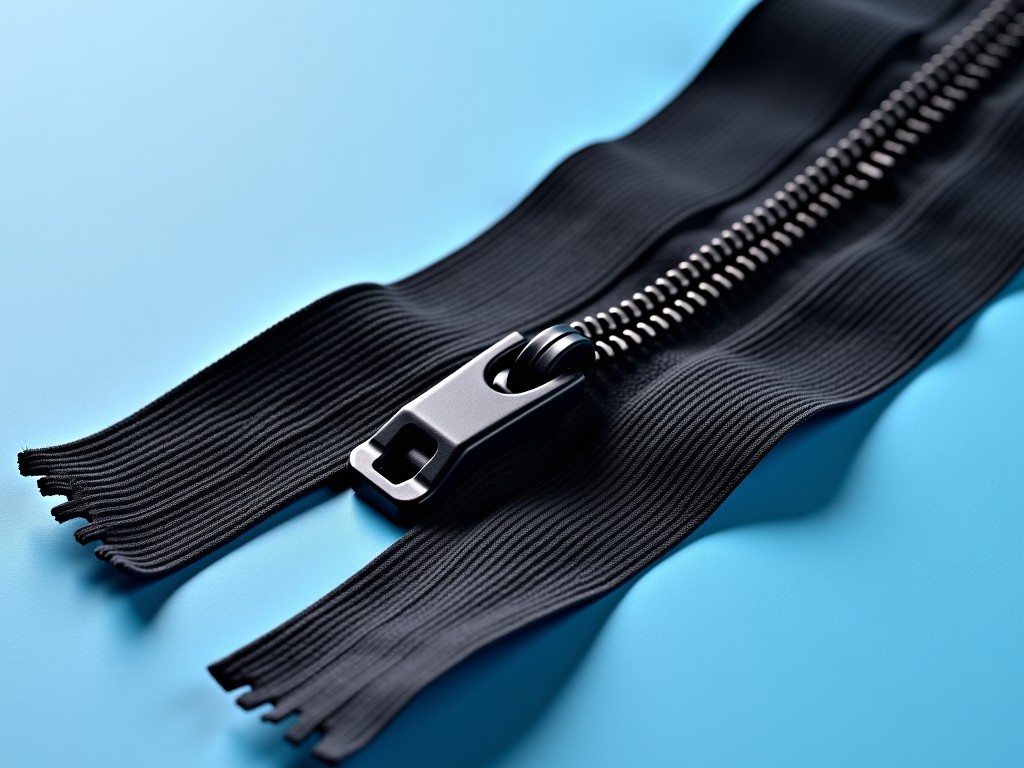
Heavy duty zipper accessories incorporate reinforced teeth geometry with a pitch of 4.5 mm and a tooth height of 2.2 mm, increasing interlock shear resistance by roughly 30 % compared to standard coil zippers. The slider housing features a dual‑cam mechanism that distributes pull force across two contact points, reducing peak stress on the pull tab by approximately 18 %. Additionally, a low‑friction PTFE coating applied to the slider interior lowers the actuation force to below 12 N for a 100 mm zipper length under a 5 kg load.
Manufacturing Process Overview
Production begins with precision stamping of brass or stainless steel strip to form zipper teeth, followed by continuous annealing at 550 °C to relieve internal stresses. For polymer accessories, injection molding occurs at 190 °C with a holding pressure of 80 MPa, ensuring < 0.02 mm dimensional tolerance on tooth profiles. Secondary operations include ultrasonic welding of fabric tape to the teeth, applying a nickel‑free plating layer of 2 µm thickness on metal parts, and final laser etching of lot codes for traceability.
Quality Assurance and Testing
Each batch undergoes tensile pull‑out testing according to ISO 16732‑1, where a minimum sustained load of 250 N must be maintained for 10 seconds without tooth disengagement. Fatigue endurance is evaluated via 50 000 open‑close cycles at a speed of 30 cpm, with acceptable wear limited to < 0.05 mm loss in tooth height. Salt spray exposure (ASTM B117) for 480 hours verifies coating integrity, showing no more than 5 % red rust area on metal surfaces.
- Dimensional inspection using coordinate measuring machines (CMM) with ±0.01 mm repeatability.
- Visual surface defect classification under 10× magnification per IPC‑A‑610.
- Functional actuation force measurement calibrated to ±0.5 N.
Typical Applications and Rationale
In automotive seat‑belt assemblies, zipper accessories must retain integrity under dynamic loads exceeding 300 N and temperature fluctuations from ‑30 °C to +80 °C; brass C36000 sliders provide the required fatigue life while maintaining low electrical resistance for integrated sensor wiring. For industrial protective covers used in chemical plants, stainless steel 304 teeth resist permeation by aggressive solvents and maintain closure strength after repeated decontamination cycles at 120 °C. Heavy‑duty luggage systems benefit from POM‑GF sliders due to their low weight (≈ 4 g per 100 mm) and resistance to abrasion from conveyor handling, ensuring reliable operation over 200 000 cycles.
- Automotive interior trim – requires vibration resistance and low temperature flexibility.
- Chemical resistant protective gear – demands corrosion barrier and thermal stability.
- Military grade backpacks – needs lightweight construction with high cycle endurance.
Customization Options
Clients may specify tooth pitch ranging from 3.8 mm to 5.2 mm to match specific fabric weave densities, adjust slider pull tab geometry for ergonomic force requirements between 8 N and 20 N, and select alternative plating finishes such as tin‑zinc (5 µm) or black chrome (1 µm) for aesthetic or environmental compliance. Length tolerances can be tightened to ±0.5 mm for automated sewing lines, and custom lot numbers or barcodes can be laser‑etched directly onto the slider body.
Packaging and Logistics
Finished accessories are packed in anti‑static polyethylene bags with desiccant packs, then placed in corrugated cartons rated for 25 kg burst strength. Each carton includes a printed packing list detailing material grade, lot number, and quantity. For export shipments, cartons are palletized using ISPM‑15 compliant wood pallets and secured with PET straps, providing protection against moisture ingress and mechanical shock during transit.
Frequently Asked Questions
Can dimensions be customized for specific fabric widths?
Yes. Tooth pitch, tape width, and overall length are adjustable according to the fabric specifications you provide. Detailed drawings or swatches are required to generate a precise quote.
What information is needed before receiving a quotation?
We require the intended material (brass, stainless steel, or POM‑GF), target tensile or pull‑out load, operating temperature range, any plating or coating preferences, and estimated annual volume. Including a sample or drawing helps expedite the process.
How is quality inspected before shipment?
Each lot undergoes tensile pull‑out testing, fatigue cycle verification, salt spray assessment, and dimensional CMM checks as outlined in our quality assurance section. Inspection certificates are available upon request.
What packaging methods are available for overseas delivery?
Standard packaging includes anti‑static bags inside burst‑strength cartons. For added protection, we offer vacuum‑sealed bags, moisture‑barrier liners, and custom foam inserts. All options comply with ISPM‑15 pallet standards.
What is the typical production lead time?
Lead times range from 3 to 5 weeks for standard configurations, depending on material availability and order volume. Expedited schedules are possible for critical projects subject to capacity confirmation.
Contact our technical team to discuss your heavy duty zipper accessory requirements.