China Industrial Zipper Tape Factory
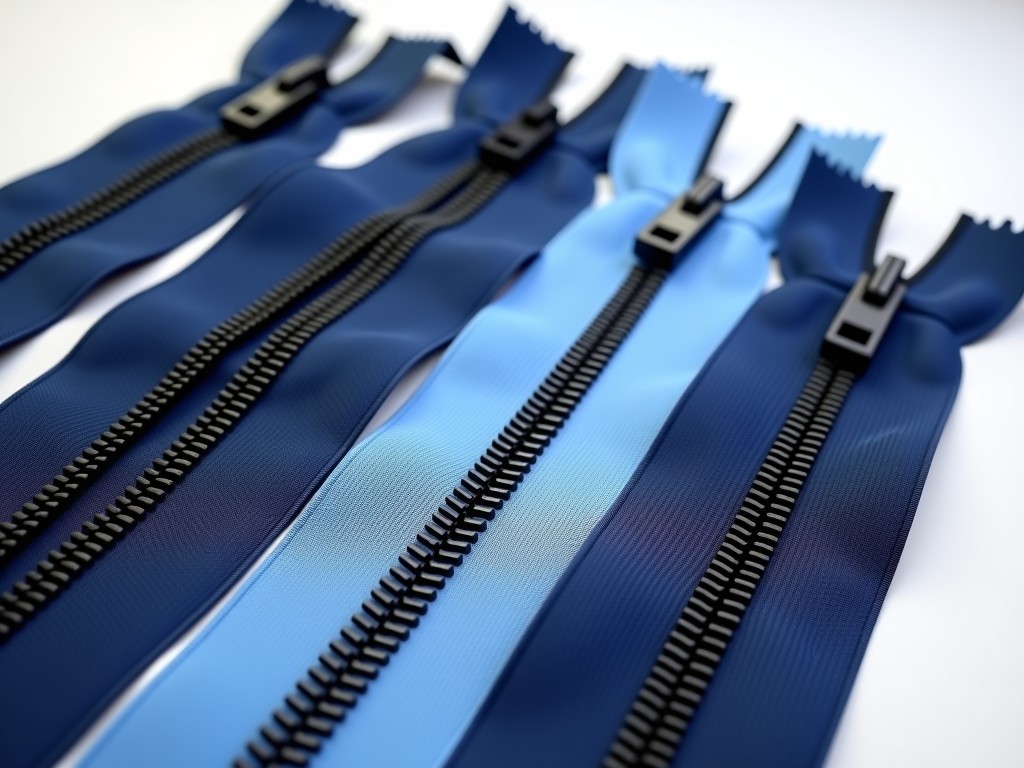
The facility produces continuous filament zipper tapes designed for heavy‑duty industrial use, with standard widths ranging from 3 mm to 20 mm and coil lengths up to 5 000 m. Tapes are manufactured on high‑speed looms that maintain width tolerance within ±0.1 mm and thickness variation below ±0.02 mm. This precision reduces assembly errors in downstream sewing or molding processes.
Material Composition
Polyester filament yarns of 150–300 denier are the base material, delivering a tenacity of 4.5–6.0 cN/tex and a melting point near 255 °C. For environments requiring superior abrasion resistance, nylon 6,6 yarns with a tenacity of 6.5–8.0 cN/tex and a melting point of approximately 260 °C are offered. Both yarn types receive a heat‑set treatment to stabilize dimensions during high‑temperature curing.
A low‑friction lubricant coating (typically a silicone‑based finish) is applied to the tape surface, reducing the coefficient of friction to 0.2–0.3 measured against standard polyester sewing thread. This coating improves feed consistency in automated zipper machines and minimizes wear on tooling.
Construction Types
- Coil zipper tape – formed by winding the monofilament coil onto the tape base, providing flexibility and self‑repairing properties.
- Molded zipper tape – features individually injection‑molded teeth locked into the tape, offering high lateral strength and consistent tooth pitch.
- Invisible zipper tape – incorporates concealed teeth on the reverse side, suitable for applications where a seamless exterior appearance is required.
Performance Characteristics
| Parameter | Typical Value | Test Method |
|---|---|---|
| Width tolerance | ±0.1 mm | ISO 3064 |
| Thickness | 0.20–0.45 mm (depending on yarn) | Micrometer measurement |
| Tensile strength (tape) | 15–30 N/mm width | ASTM D5034 |
| Peel strength (tape‑to‑teeth) | ≥2.5 N/mm | ASTM D1876 |
| Temperature resistance (continuous) | ‑40 °C to +120 °C (polyester); ‑40 °C to +150 °C (nylon) | DIN 53372 |
| Color fastness to light | Grade ≥4 (ISO 105‑B02) | ISO 105‑B02 |
Industrial Applications
In automotive interior trim, the tape’s high tensile strength and temperature resistance ensure durability under repeated flexing and exposure to under‑hood heat cycles. The low‑friction coating enables smooth operation of side‑panel zippers that undergo thousands of open‑close cycles during vehicle life.
Outdoor equipment manufacturers select nylon‑based tapes for their superior abrasion resistance and UV stability, which maintains functionality after prolonged exposure to sunlight and rain. The coil construction provides self‑repairing capability when minor tooth deformation occurs, reducing field failures.
Protective clothing producers require tapes that retain integrity after repeated laundering and exposure to chemicals; the polyester variant’s resistance to hydrolysis and its color‑fastness properties meet stringent industry standards such as EN ISO 13688.
Quality Control Philosophy
Each production lot undergoes inline width and thickness monitoring using laser gauges, with feedback loops adjusting loom tension in real time. Final inspection includes tensile testing on five random samples per batch, peel strength measurement on ten samples, and visual inspection for defects under 10× magnification.
- Width and thickness tolerance verification (±0.1 mm, ±0.02 mm)
- Tensile and peel strength sampling (ASTM D5034, D1876)
- Color fastness to light and washing (ISO 105‑B02, ISO 105‑C06)
- Surface lubricant consistency (coefficient of friction test)
- Visual defect detection (foreign material, missing teeth)
Customization Options
Customers may specify yarn type (polyester, nylon, or hybrid blends), denier range, coating formulation (silicone, wax, or fluoropolymer), and tooth geometry (standard, reverse, or concealed). Width can be adjusted in 0.5 mm increments within the 3 mm–20 mm range, and coil length can be tailored to match specific production line spool sizes.
Additional options include custom color matching to Pantone or RAL standards, incorporation of reflective or flame‑retardant additives, and integration of woven logos or barcodes directly onto the tape surface during the weaving process.
Packaging and Logistics
- Standard packaging: perforated cardboard cores with protective polyethylene film, labeled with lot number, material, and dimensions.
- Optional packaging: reusable plastic spools for automated feed systems, or vacuum‑sealed bags for moisture‑sensitive applications.
- Pallet configuration: 40 cartons per pallet, each carton weighing approximately 15 kg, optimized for container loading.
- Shipping marks include handling instructions (keep dry, avoid direct sunlight) and compliance with ISPM‑15 for wood pallets where applicable.
Frequently Asked Questions
Can dimensions be customized?
Yes, width, thickness, and coil length are adjustable according to project requirements. Detailed specifications, including tolerance levels, should be provided during the quotation stage to ensure accurate tooling setup.
What information is needed for a quotation?
Required data includes desired yarn type, denier, width, length per roll, coating preference, any special additives (e.g., UV stabilizers), and target annual volume. Providing a sample or drawing of the intended zipper configuration helps expedite the quote.
How is quality verified before shipment?
Pre‑shipment verification comprises a final audit of width/thickness, tensile and peel strength tests on sampled rolls, and a visual inspection for cosmetic defects. A test report summarizing these results is available upon request.
What is the typical lead time?
Lead time varies with order complexity; standard polyester tapes in stock widths typically ship within 7‑10 business days, while customized nylon or coated variants require 15‑20 business days for production and quality assurance.
To discuss your specific zipper tape requirements or to request a formal quotation, please contact our technical sales team via the link below.
Request a Quote / Contact Us