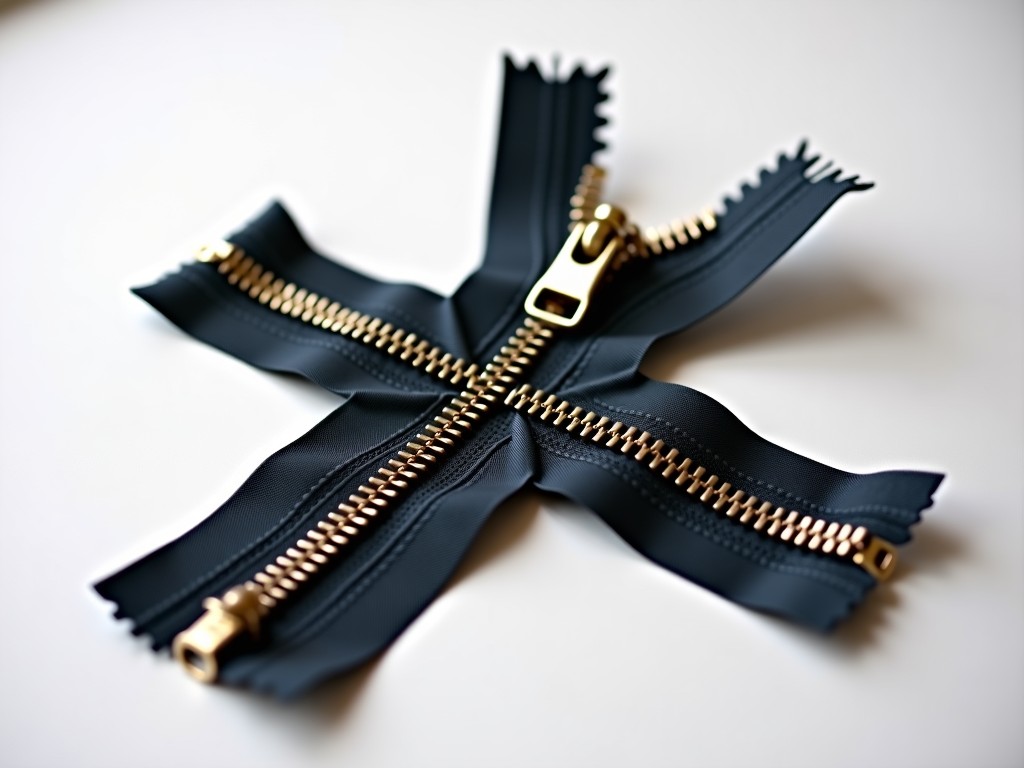
Metal Zipper Pin Box and Replacement Parts – Supplier Overview
A metal zipper pin box houses the retaining pin that engages the zipper slider, providing the mechanical lock that prevents unintended opening. These components are typically produced from corrosion‑resistant alloys and are supplied together with matching replacement pins for maintenance cycles.
Common material choices include austenitic stainless steel (AISI 304/316), brass C36000, and zinc‑alloy die castings, each selected based on required strength, environmental exposure, and cost. Stainless steel offers tensile strength above 500 MPa and excellent resistance to salt spray, while brass provides good machinability and a lower galvanic potential with copper‑based zippers. Zinc alloy allows complex geometries via die casting at a lower unit cost but requires surface plating for corrosion protection.
Production typically involves precision stamping or CNC machining of the box body, followed by deburring, cleaning, and surface treatment such as passivation, nickel plating, or PVD coating. Replacement pins are manufactured to matching tolerances, often using cold‑heading or Swiss‑type turning to achieve pin diameters within ±0.02 mm.
- Pin diameter: 0.8 mm – 2.0 mm (customizable)
- Box wall thickness: 0.3 mm – 0.8 mm
- Tensile strength of box material: ≥400 MPa (stainless steel) or ≥250 MPa (brass)
- Corrosion resistance: ≥96 h salt spray (ASTM B117) for coated parts
- Dimensional tolerance: ±0.05 mm on critical features
| Attribute | Standard Offering | Customizable per Project |
|---|---|---|
| Material | AISI 304 stainless steel | AISI 316, brass C36000, zinc‑alloy, specialty alloys |
| Surface finish | Passivation (stainless) or nickel plating | PVD (TiN, CrN), black oxide, electrophoretic coating |
| Pin diameter | 1.2 mm | 0.8 mm – 2.0 mm in 0.1 mm increments |
| Box length | 10 mm – 30 mm (standard lengths) | Any length up to 100 mm, with stepped or flanged designs |
| Minimum order quantity | 5 000 pcs | Negotiable; prototype runs from 200 pcs |
In heavy‑duty luggage and outdoor gear, the pin box must withstand repeated flexing and impact loads without deformation, making high‑strength stainless steel the preferred choice. For fashion apparel where appearance matters, brass pin boxes with a polished or plated finish provide a smooth feel and resist tarnish during normal washing cycles. Automotive interior trim uses zinc‑alloy boxes with a black PVD coating to meet weight‑reduction targets while maintaining corrosion resistance under cabin humidity.
Industrial fastening systems, such as those securing protective covers on machinery, rely on the pin box’s ability to retain the slider under vibration loads exceeding 10 g. The replaceable pin design allows field service without replacing the entire zipper assembly, reducing downtime and spare‑part inventory.
Customers can specify pin head shapes (flat, domed, or knurled) to match actuation force requirements, and select box features such as flanges, notches, or integrated guide ribs for automated assembly lines. Coating thickness can be tightened to meet specific ASTM B117 salt‑spray durations, with test coupons provided upon request. Laser etching or pad printing enables part numbers or logos to be added directly on the box surface for traceability.
Incoming raw material is verified with mill certificates and spectrometer checks for alloy composition. Each production lot undergoes dimensional inspection using optical comparators, with critical features measured to ±0.02 mm, and a random sample is subjected to a 96‑hour salt‑spray test per ASTM B117. Visual inspection under 10× magnification checks for burrs, surface defects, and coating uniformity before parts are packed.
Frequently Asked Questions
- Can dimensions be customized? Yes, pin diameter, box length, wall thickness, and feature geometry can be adjusted to match your zipper design; tooling costs are discussed after receiving a detailed drawing or sample.
- What information is required before quotation? We need material preference, required dimensions (including tolerances), expected annual quantity, surface‑finish specification, and any applicable standards (e.g., ASTM, ISO).
- How is quality inspected? Incoming material is checked with spectrometer; final parts undergo dimensional CMM or optical comparator testing, salt‑spray corrosion testing, and visual inspection under magnification.
- What packaging methods are available? Parts are packed in anti‑static trays or sealed polybags, with optional vacuum‑sealed cartons for corrosion‑sensitive finishes; labeling includes part number, lot code, and QC stamp.
Get a Quote or Sample
To request a formal quotation, technical drawing review, or a sample shipment, please provide your project specifications via the contact form.
Contact Us