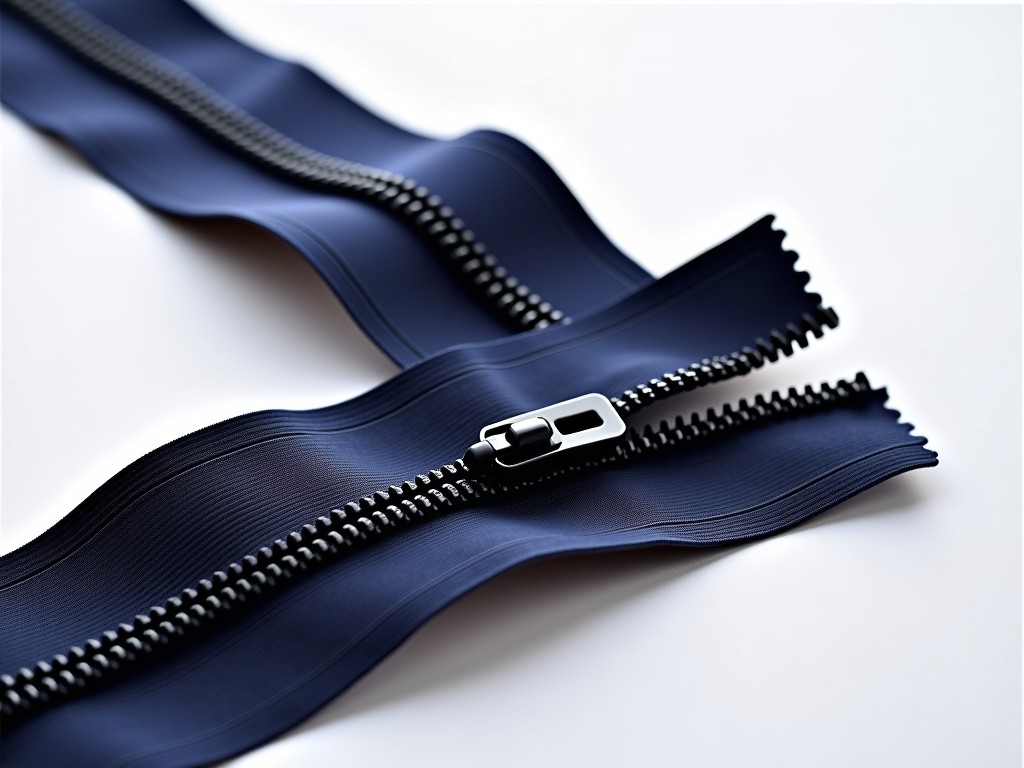
Custom Zipper Accessories for Bags and Garments
The performance of a zipper system depends on the compatibility of its slider, pull, stop, and tape components with the substrate material and end‑use conditions. Selecting each accessory based on measurable properties such as tensile strength, fatigue resistance, and corrosion rating reduces the risk of field failure. This page explains how those properties are evaluated and matched to specific bag and garment applications.
Material Options and Their Engineering Characteristics
- Brass sliders – typical tensile strength 340‑380 MPa, excellent wear resistance, suitable for heavy‑duty outdoor bags.
- Zinc‑alloy sliders – tensile strength 260‑300 MPa, good die‑casting fidelity, cost‑effective for medium‑load garments.
- Polyester tape – tenacity 4.5‑5.5 g/den, UV stabilization up to 500 h, low moisture regain.
- Nylon tape – tenacity 5.0‑6.0 g/den, melting point 250 °C, high abrasion resistance.
Each material grade is supplied with mill test reports that confirm chemical composition and mechanical tolerances, allowing the buyer to verify compliance with ISO 9001‑2015 or specific OEM standards.
Customization Choices Driven by Functional Requirements
- Slider geometry – adjustable pull tab length (10‑30 mm) and cam angle to match required pull force (5‑25 N).
- Stop type – crimp, sewn, or ultrasonic welded; each provides a different holding strength (measured in N) and fatigue life.
- Surface finish – nickel‑free plating, antique brass, or matte polymer coating; thickness measured in µm and salt‑spray resistance per ASTM B117.
- Tape width and tooth profile – standard #3, #5, #8, or custom widths from 3 mm to 12 mm with pitch tolerance ±0.05 mm.
Customization is quoted after reviewing the buyer’s technical drawing or sample, ensuring that the final part meets the specified load‑cycle and environmental criteria.
Manufacturing Process Overview
Slider bodies are produced via precision die‑casting or CNC machining, followed by deburring and surface treatment. Tape is extruded, then teeth are formed using high‑speed molding dies that maintain tooth pitch within ±0.02 mm. Assembly employs automated ultrasonic welding for stops and manual or semi‑automatic riveting for pulls, each step monitored with inline torque and force sensors.
Batch traceability is maintained through laser‑etched lot codes, enabling rapid investigation of any non‑conformance reported in the field.
Quality Control Philosophy
Incoming raw material is inspected with spectrometry for alloy composition and tensile testing for mechanical properties. In‑process checks include dimensional verification using coordinate‑measuring machines (CMM) and visual inspection under 10× magnification for surface defects. Final product undergoes cyclic load testing (10,000 cycles at rated pull force) and salt‑spray exposure (96 h) to validate durability.
Acceptable quality level (AQL) is set at 0.65 % for critical dimensions and 1.0 % for cosmetic attributes, conforming to ANSI/ASQ Z1.4 standards.
Typical Applications and Performance Rationale
Outdoor backpacks require sliders with high corrosion resistance and pull forces exceeding 20 N to withstand frequent loading; brass sliders with nickel‑free plating meet these demands. Sportswear garments benefit from lightweight nylon tape and low‑profile sliders that reduce bulk while maintaining a minimum of 5 N pull force for reliable closure. Heavy‑duty tool bags often utilize zinc‑alloy stops with ultrasonic welding, delivering a static holding strength above 150 N and resisting vibration‑induced disengagement.
By aligning accessory specifications with the mechanical and environmental stresses of each end use, designers can predict service life and avoid premature field failures.
Technical Specification Table
| Parameter | Typical Value / Range | Test Method / Reference |
|---|---|---|
| Slider Tensile Strength (Brass) | 340‑380 MPa | ASTM E8/E8M |
| Slider Pull Force (Adjustable) | 5‑25 N | Internal pull‑force gauge |
| Tape Tenacity (Polyester) | 4.5‑5.5 g/den | ASTM D2256 |
| Tape UV Resistance | ≥500 h (no >5 % loss) | ASTM G154 |
| Stop Holding Strength (Ultrasonic Weld) | >150 N | Static tensile test |
| Salt‑Spray Resistance (Nickel‑Free Plating) | ≥96 h (no red rust) | ASTM B117 |
Values shown are typical ranges; actual specifications are confirmed per project requirements and can be adjusted to meet specific performance targets.