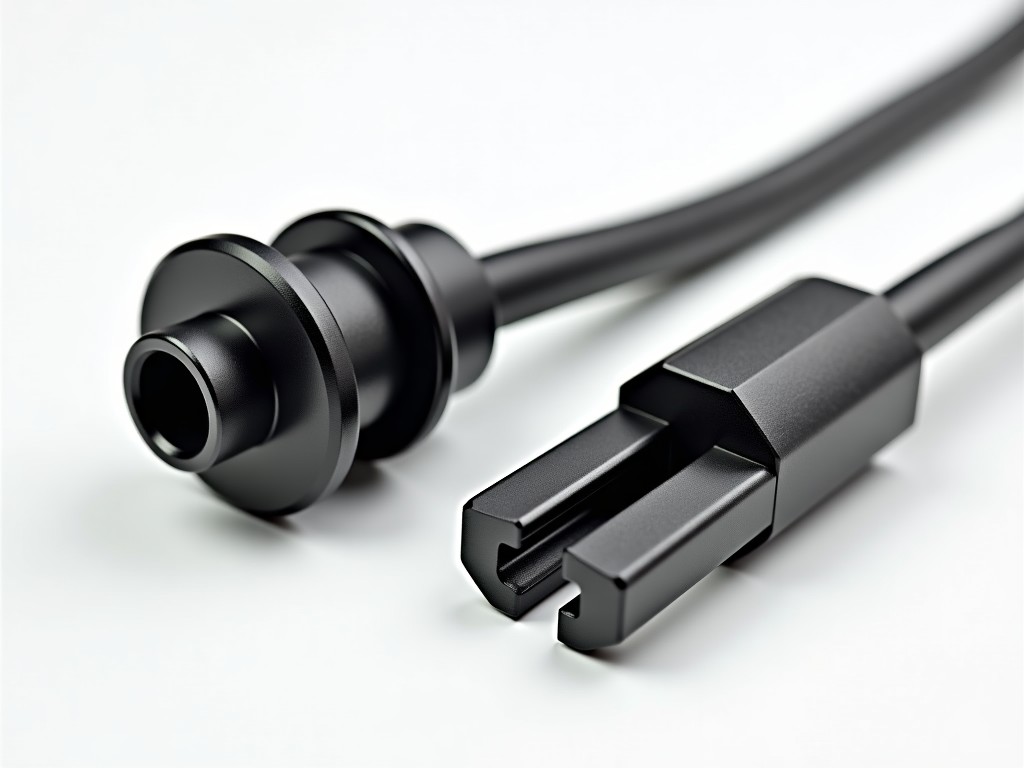
Custom Zipper Stop Components and Stoppers Manufacturer
Zipper stop components are small mechanical elements that limit the travel of a zipper slider, preventing over‑extension and ensuring reliable closure. Their geometry, material, and dimensional tolerance directly affect the lifespan of the fastening system in garments, luggage, and technical textiles.
Design and Engineering Considerations
Engineers first define the stop’s interaction force with the slider, typically ranging from 0.2 N to 0.8 N depending on the end‑use. The stop must withstand repeated cyclic loading without permanent deformation, which leads to specifications for yield strength and fatigue resistance.
Tolerance on the stop’s thickness is usually held to ±0.02 mm to maintain consistent slider feel, while the length is customized to match the zipper tape width, often between 2 mm and 6 mm. These tight tolerances reduce the risk of slider jamming or premature wear.
Material Options
| Material | Density (g/cm³) | Tensile Strength (MPa) | Temperature Range (°C) | Typical Use |
|---|---|---|---|---|
| Acetal (POM) | 1.41 | 65 | -40 to 100 | General apparel zippers |
| Polyamide 6,6 (PA66) | 1.14 | 80 | -30 to 120 | Heavy‑duty luggage |
| Stainless Steel 304 | 8.0 | 520 | -196 to 500 | Outdoor gear, fire‑resistant |
| Thermoplastic Polyurethane (TPU) | 1.20 | 40 | -30 to 80 | Flexible, over‑molded stops |
Manufacturing Process
Depending on material and geometry, stops are produced via CNC machining, precision stamping, or injection molding. CNC machining achieves tolerances of ±0.01 mm for metal stops, while injection molding of polymers holds dimensions within ±0.03 mm.
Secondary operations such as deburring, surface polishing, or applying a low‑friction coating (e.g., PTFE) are performed to ensure smooth slider interaction and reduce wear.
Quality Control and Inspection
Each batch undergoes incoming material verification with material certificates and spectrometer checks. Dimensional inspection is performed using optical comparators or CMM, checking stop thickness, length, and edge radius.
Functional testing simulates 10,000 slider cycles at a defined load to confirm no permanent deformation or increase in pull‑off force beyond 10 % of the initial value.
Customization Options
- Lengths from 1 mm to 10 mm in 0.1 mm increments
- Various head shapes: cylindrical, conical, rectangular, or custom profiles
- Mounting features such as flanges, barbs, or adhesive backing
- Surface treatments: anodizing for aluminum, passivation for stainless steel, or PTFE coating
- Color matching for polymer stops using masterbatch or pigment
Applications
In outdoor apparel, zipper stops must retain performance after exposure to UV, rain, and temperature cycling; therefore, UV‑stabilized PA66 or coated stainless steel is selected to maintain tensile strength above 70 MPa after 500 h of UV exposure.
For automotive interior trim, stops are required to resist oil and gasoline; acetal with a PTFE overlay provides low friction and chemical resistance, ensuring consistent slider feel over the vehicle’s lifespan.
In heavy‑duty luggage, impact resistance is critical; molded TPU stops absorb kinetic energy, reducing the chance of slider deformation when the bag is dropped from 1 m.
Packaging and Logistics
Stops are packed in anti‑static, humidity‑controlled trays with each tray holding 500 pcs, then placed in corrugated cartons lined with polyethylene film to prevent moisture ingress.
Cartons are marked with lot numbers, material grade, and inspection certificates, facilitating traceability for OEMs that require ISO 9001‑aligned documentation.
Frequently Asked Questions
Can dimensions be customized?
Yes. Length, width, and head geometry are adjusted according to the zipper tape width and slider design, with tolerances as tight as ±0.01 mm for metal stops.
What information is required before quotation?
We need the zipper type (e.g., coil, VISLON), tape width, slider model, desired stop material, any required coating, and annual volume to optimize tooling.
What materials are available?
Standard options include acetal, PA66, stainless steel 304, and TPU; specialty alloys or high‑performance polymers are available upon request.
How is quality inspected?
Each lot receives dimensional CMM checks, material verification, and a functional cycle test of 10,000 repetitions at the specified load.
What packaging methods are available?
We offer anti‑static trays, bulk bags, or custom blister packs, all with humidity barriers and clear labeling for traceability.
To discuss your custom zipper stop requirements, contact our engineering team for a detailed quotation and lead‑time estimate.