Factory Direct Zipper Slider Parts and Accessories Supplier
Zipper sliders are the moving elements that engage the teeth of a chain to open or close a fastening system. Their performance depends on precise geometry, material compatibility, and surface finish, which together determine engagement force, wear resistance, and corrosion tolerance in demanding environments.
Core Components and Material Choices
A typical slider assembly includes a slider body, pull tab, stopper, and sometimes a locking pin. The body is commonly formed from zinc alloy die‑casting for its strength‑to‑weight ratio, while brass or stainless steel is selected when higher corrosion resistance or aesthetic finish is required. Non‑metallic parts such as the pull tab often use POM or nylon for low friction and chemical resistance.
Material selection directly influences the slider’s operating temperature range, fatigue life, and compatibility with specific chain materials (e.g., polyester coil, metal tooth, or molded plastic). Engineers match these properties to the end‑use conditions to avoid premature failure.
Material Property Overview
| Material | Typical Density (g/cm³) | Corrosion Resistance | Max Continuous Temp (°C) |
|---|---|---|---|
| Zinc Alloy (ZnAl4) | 6.6 | Moderate (requires plating) | 120 |
| Brass (CuZn37) | 8.5 | Good (natural patina) | 200 |
| Stainless Steel (AISI 304) | 8.0 | Excellent | 400 |
| POM (Acetal) | 1.4 | Excellent (chemical) | 100 |
| Nylon 6/6 | 1.1 | Good (absorbs moisture) | 80 |
Design Factors Affecting Slider Performance
Critical dimensions include the flange width, cam angle, and pull‑tab clearance. Tolerances on these features are typically held within ±0.05 mm to ensure consistent engagement force across production lots. Deviations can cause either excessive force (leading to user fatigue) or insufficient force (resulting in unintended opening).
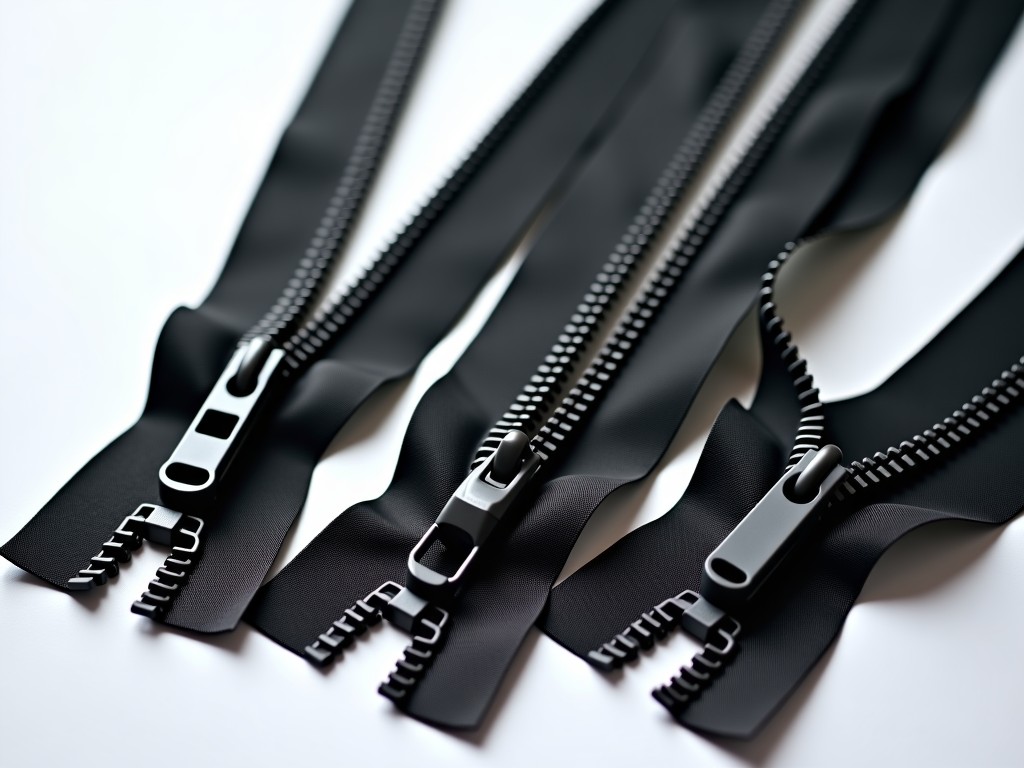
Surface treatments such as nickel plating, black oxide, or PTFE coating modify the coefficient of friction and wear rate. Engineers select a finish based on the expected number of cycles—e.g., >10,000 cycles for outdoor gear may warrant a low‑friction PTFE layer, while a decorative consumer bag may prioritize appearance over wear life.
Typical Industrial Applications
In automotive interior trim, sliders must withstand temperature cycling from –30 °C to +80 °C and resist exposure to oils and UV radiation. Here, zinc‑alloy bodies with nickel‑PTFE coating provide the needed durability while keeping weight low for fuel‑efficiency considerations.
Outdoor equipment such as tents, backpacks, and dry suits requires resistance to salt spray and abrasion. Stainless‑steel sliders with a brushed finish meet these demands, offering long service life without frequent replacement.
Medical device bags and sterile packaging demand non‑contaminating materials and smooth operation to avoid particle generation. POM or nylon sliders, free of metal‑ion leaching, are chosen for their biocompatibility and low outgassing characteristics.
Quality Control and Inspection
Dimensional inspection is performed on a sampling basis using coordinate measuring machines (CMM) to verify flange width, cam angle, and overall height. Critical functional tests include engagement force measurement (typically 0.8–1.5 N for standard apparel sliders) and cycle endurance testing to 5,000–20,000 strokes depending on the target market.
Surface finish is assessed via profilometry (Ra values) and adhesion testing for plated layers. Visual inspection under 10× magnification checks for burrs, flash, or foreign‑particle inclusion that could impair smooth operation.
Customization Options
Buyers can specify slider length (from 6 mm for miniature applications to 30 mm for heavy‑duty uses), pull‑tab geometry (straight, curved, or ergonomic), and branding methods such as laser etching, pad printing, or over‑molding. These choices allow OEMs to align the fastener with product aesthetics and functional requirements.
Additional options include alternative stopper shapes (pin, box, or internal) to prevent over‑travel, and specialized coatings such as antimicrobial silver‑ion layers for healthcare textiles. All customizations are subject to tooling feasibility and minimum order quantities that vary with complexity.
Packaging and Logistics
Standard packaging uses anti‑static polyethylene bags placed in corrugated cartons with moisture‑barrier liners for overseas shipment. For high‑volume orders, sliders are packed in reusable trays that enable automated feeding on assembly lines, reducing handling time and potential damage.
Each carton is labeled with part number, material grade, lot number, and quantity to support traceability. Export shipments comply with ISPM‑15 wood‑packing regulations and include desiccant packs to maintain humidity below 50 % RH during transit.
Frequently Asked Questions
- Q: Can dimensions be customized beyond standard ranges?
A: Yes, special lengths, flange widths, or pull‑tab shapes are feasible with new tooling; lead time and MOQ depend on complexity. - Q: What information is required before quotation?
A: Required details include slider length, material preference, desired finish, estimated annual volume, and any specific functional tests (e.g., cycle count, force spec). - Q: What materials are available for corrosive environments?
A: Stainless steel (AISI 304/316), brass with nickel‑PTFE coating, or coated zinc alloy are typical choices; selection depends on exposure to salt, chemicals, or UV. - Q: How is quality inspected for bulk orders?
A: Inspection follows AQL‑based sampling: dimensional checks (CMM), functional force testing, and surface‑finish evaluation. Full inspection reports are available upon request. - Q: What packaging methods protect against moisture and static?
A: Anti‑static polyethylene bags with desiccant packs, placed in moisture‑barrier lined cartons, provide protection for sea and air freight. - Q: What is the typical production lead time?
A: Standard items ship within 2–3 weeks after PO confirmation; customized items may require 4–6 weeks depending on tooling. - Q: How are samples arranged for evaluation?
A: Free samples (up to 5 pcs) can be shipped via express courier; customers cover freight charges or arrange their own carrier.
For technical data sheets, sample requests, or to discuss a custom fastener solution, please reach out using the contact form below. Our engineering team will review your specifications and provide a feasible quotation within one business day.
Request a Quote or Sample