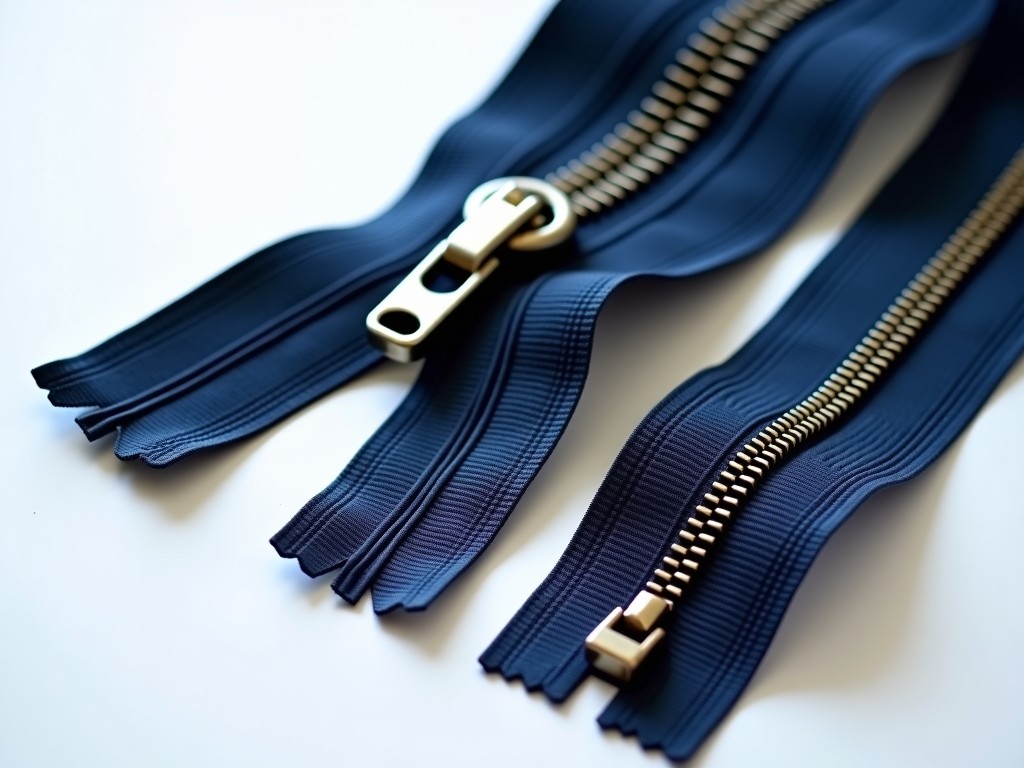
OEM Zipper Spare Parts and Accessories
Zipper spare parts include sliders, pulls, stops, and tape components that are engineered to meet the mechanical demands of automotive, aerospace, and heavy‑equipment applications. Each part is produced to precise dimensional tolerances to ensure reliable engagement and long service life under cyclic loading.
The design focuses on minimizing play between interlocking elements while allowing smooth actuation across a temperature range of –40 °C to +120 °C, depending on material selection.
Material Options
Selection of base material influences strength, corrosion resistance, and weight. Commonly used alloys and polymers are listed with their typical mechanical properties.
- Stainless steel 304 – tensile strength ≈ 520 MPa, excellent resistance to oxidation and mild chemicals.
- Brass C36000 – tensile strength ≈ 350 MPa, good machinability, suitable for decorative sliders with plating options.
- Aluminum alloy 6061‑T6 – tensile strength ≈ 310 MPa, low density (~2.7 g/cm³), anodizable for wear resistance.
- Polyoxymethylene (POM) – tensile strength ≈ 70 MPa, low friction coefficient, operates continuously up to 100 °C.
- Nylon PA66 – tensile strength ≈ 80 MPa, good impact resistance, absorbs moisture (< 2.5 % at equilibrium).
Design and Tolerance Specifications
Critical dimensions include slider width, pull stem diameter, stop thickness, and tape tooth pitch. These are held to tight tolerances to maintain consistent interlocking force.
Typical tolerance grades are ±0.02 mm for metal sliders and ±0.05 mm for molded polymer components, measured at 20 °C ambient temperature.
Surface roughness (Ra) for moving contact surfaces is kept below 0.4 µm to reduce wear and prevent galling during repeated cycles.
Manufacturing Process
Metal parts are produced via precision stamping followed by secondary operations such as deburring, tumbling, and optional plating (nickel, chrome, or black oxide). Polymer components are injection‑molded using calibrated molds with shrinkage compensation.
In‑process monitoring includes dimensional checks with coordinate‑measuring machines (CMM) and visual inspection for flash or burrs. Heat‑treatment cycles, when applied, are controlled to achieve target hardness without inducing distortion.
Assembly of sliders onto tape is performed on automated lines that apply a controlled preload to ensure proper engagement force (typically 1.5 N to 3.0 N per tooth pair).
Quality Control and Inspection
A multi‑stage inspection plan verifies conformity to drawing specifications and functional performance. Each batch receives a first‑article inspection (FAI) before full‑scale release.
- Dimensional verification: critical features measured against GD&T tolerances using CMM or optical comparators.
- Mechanical testing: pull‑off force, fatigue endurance (minimum 5,000 cycles at rated load), and corrosion salt‑spray exposure (ASTM B117) for coated parts.
- Visual inspection: surface finish, plating uniformity, and absence of defects under 10× magnification.
- Material verification: positive material identification (PMI) for alloys and melt flow index for polymers.
Inspection records are retained for traceability and made available to customers upon request.
Applications in Industrial Settings
Zipper spare parts are selected where reliable closure, easy operation, and resistance to environmental stressors are required. Typical sectors include transportation, outdoor equipment, and protective gear.
In automotive seating systems, sliders must endure repeated actuation while maintaining sealing integrity against moisture and dust; stainless steel sliders with nickel plating meet these demands.
Heavy‑duty outdoor bags benefit from aluminum stops that provide lightweight strength and can be anodized to match color codes, reducing overall mass without compromising durability.
Aerospace interior panels often use POM pulls due to low outgassing characteristics and consistent performance across temperature extremes experienced at altitude.
Technical Data
| Property | Typical Value (Stainless Steel 304) | Typical Value (Brass C36000) | Typical Value (POM) |
|---|---|---|---|
| Tensile Strength | ≈ 520 MPa | ≈ 350 MPa | ≈ 70 MPa |
| Density | 8.0 g/cm³ | 8.5 g/cm³ | 1.4 g/cm³ |
| Operating Temperature Range | –40 °C to +300 °C | –40 °C to +250 °C | –40 °C to +100 °C |
| Coefficient of Friction (vs. Steel) | 0.15 (lubricated) | 0.20 (lubricated) | 0.10 (lubricated) |
| Typical Tolerance (Slider Width) | ±0.02 mm | ±0.02 mm | ±0.05 mm |
Values represent typical ranges; actual specifications are customized according to project requirements and confirmed during FAI.
Customization Capabilities
OEM customers often require adjustments to geometry, surface finish, or material grade to integrate zipper assemblies into specific designs. The following aspects can be tailored:
- Slider profile – custom cam shapes for specialized pull forces or ergonomic grip.
- Pull type – rope, tab, or molded ergonomic handles with optional over‑molding of thermoplastic elastomer.
- Stop design – reinforced bar stops, pin stops, or removable stops for serviceability.
- Tape width and tooth pitch – adjustable from 3 mm to 10 mm width, pitch from 2.5 mm to 5 mm.
- Surface treatment – plating (nickel, chrome, black oxide), passivation, anodizing, or powder coating.
- Packaging – bulk trays, tape‑and‑reel for automated feed, or individual poly bags with labeling.
Engineering support includes DFM reviews, prototype tooling, and validation testing to ensure the customized part meets functional specifications before volume production.
Frequently Asked Questions
Can dimensions be customized?
Yes. Critical dimensions such as slider width, pull length, and tape tooth pitch are adjustable based on customer drawings or sample parts. Tolerances are defined during the quotation stage.
What information is required before quotation?
To provide an accurate quote we need: material preference, target dimensions (including tolerances), expected annual quantity, any required surface finish, and details of the mating tape or fabric if applicable.
Which materials are available for corrosive environments?
Stainless steel grades 304 and 316, brass with nickel or chrome plating, and anodized aluminum are commonly selected for resistance to moisture, salt spray, and mild chemicals. For highly aggressive media, consult our engineering team for alloy recommendations.
How is quality inspected?
Each lot undergoes first‑article inspection, dimensional verification via CMM, mechanical testing (pull‑off force and fatigue), and visual inspection per defined acceptance criteria. Full inspection reports are available on request.
What packaging options exist for automated lines?
We offer tape‑and‑reel configurations compatible with standard pick‑and‑place equipment, as well as bulk trays with anti‑static lining. Custom labeling and barcoding can be added per customer specifications.
What is the typical production lead time?
Lead times vary with complexity and material availability but generally range from 3 to 6 weeks for tool‑ready parts after design approval. Expedited options are available for urgent projects.
For technical inquiries, sample requests, or to discuss a custom zipper spare part solution, please contact our engineering team.
Request a Quote