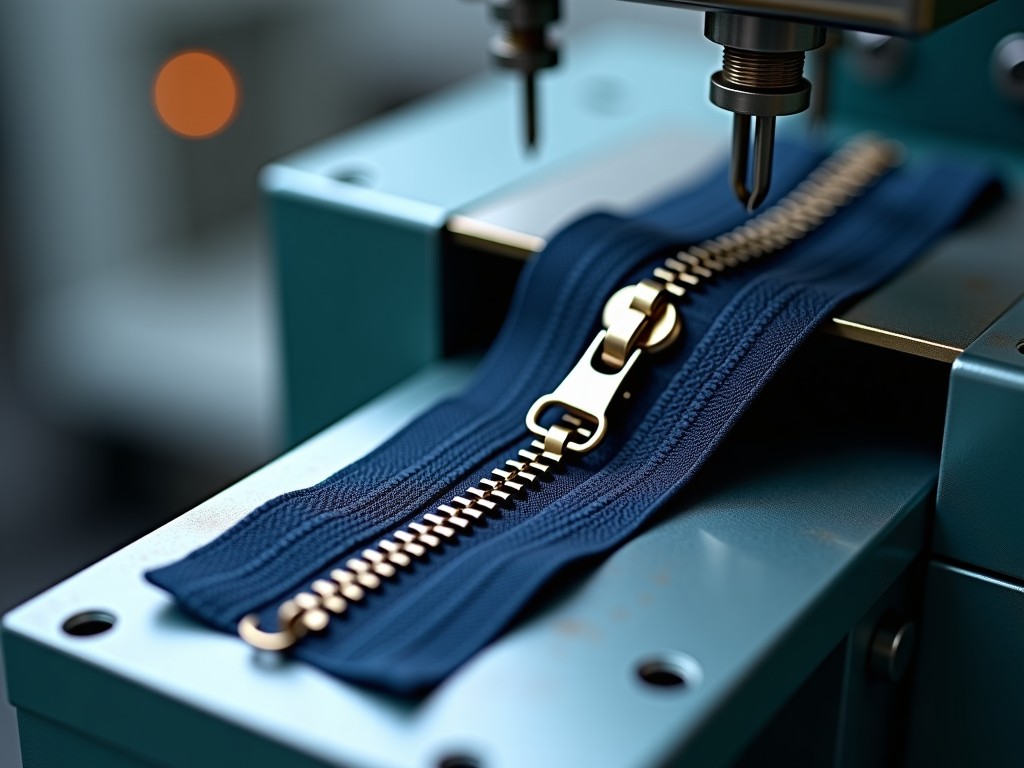
OEM Zipper Fastening Insertion Pin Box – Factory Direct Manufacturing
Insertion pins are precision‑formed metal components that engage the teeth of coil or molded zippers during the fastening operation. Their geometry determines engagement force, wear resistance, and alignment stability, directly affecting zipper lifespan and assembly speed.
Design Characteristics
The pin features a tapered shank with a controlled radius at the tip to reduce insertion torque while maintaining a positive stop against the zipper slider. Typical shank diameters range from 0.8 mm to 1.5 mm, and lengths are tailored to the zipper tape thickness, usually between 3 mm and 6 mm.
A circumferential groove near the head provides a defined break‑away point for automated feeding systems, preventing pin deformation during high‑speed pickup.
Material Options
- Stainless steel AISI 304 – corrosion‑resistant for outdoor apparel and marine gear.
- Carbon steel C1010 with zinc‑nickel plating – high wear resistance for industrial workwear.
- Brass C36000 – low friction for luxury fashion zippers where appearance matters.
Material selection is based on required tensile strength (typically 400–600 MPa), fatigue life, and compatibility with the zipper tape polymer (e.g., polyester, nylon, or PVC).
Manufacturing Process
Pins are produced via cold heading followed by precision CNC grinding of the tip and groove. Cold heading achieves grain flow alignment, increasing tensile strength by approximately 15 % compared with machined blanks.
After forming, pins undergo a batch tumble deburring process using ceramic media to remove burrs below 5 µm, ensuring smooth insertion. Final inspection includes optical measurement of shank diameter (±0.01 mm) and tip angle (±0.5°).
Customization Logic
OEM customers specify pin length, head diameter, and groove depth based on their zipper slider design and feeding equipment. Adjustments are made in the CNC grinding program without requiring new tooling, allowing lot sizes as low as 5 000 pieces.
Surface treatments such as passivation, black oxide, or PTFE coating can be added to achieve specific friction coefficients (μ = 0.10–0.25) or to meet RoHS‑2 restrictions.
Quality Assurance Approach
Each production lot is subjected to statistical process control (SPC) on critical dimensions. A sampling plan of n=5 per 10 000 pins monitors shank diameter and tip radius, with control limits set at ±3σ.
Functional validation includes a zipper pull‑force test per ASTM D2061, measuring the force required to disengage the pin from the zipper teeth. Acceptable range is 0.8 N–1.5 N for apparel zippers and up to 3.0 N for heavy‑duty applications.
All inspection records are retained for traceability and are available to customers upon request.
Typical Applications
Insertion pins are integral to the assembly of zippers used in:
- Outdoor jackets and trousers where exposure to UV and moisture demands corrosion‑ resistant pins.
- Protective workwear (e.g., flame‑resistant coveralls) requiring high‑strength pins to withstand repeated stress.
- Luxury fashion goods where low‑friction brass pins ensure smooth operation and preserve aesthetic finish.
In each case, the pin’s dimensional tolerance directly influences the zipper’s lock‑up reliability, reducing field returns and warranty costs.
Technical Specifications
| Parameter | Typical Range / Value | Notes |
|---|---|---|
| Shank Diameter | 0.8 mm – 1.5 mm | Customizable per zipper tape thickness | Length | 3 mm – 6 mm | Determined by slider design |
| Head Diameter | 1.2 mm – 2.0 mm | Influences feeding stability |
| Tip Angle | 30° ± 0.5° | Optimizes insertion torque |
| Material Tensile Strength | 400 MPa – 600 MPa | Dependent on alloy and temper |
| Surface Coating Options | Zinc‑nickel, Passivation, Black Oxide, PTFE | Selected per environmental and friction requirements |
| Pull‑Force Resistance | 0.8 N – 3.0 N | Measured per ASTM D2061 on finished zipper |
Frequently Asked Questions
Can dimensions be customized?
Yes. Shank diameter, length, head diameter, and groove depth are adjusted via CNC grinding programs. New tooling is not required for diameter changes within the 0.8 mm–1.5 mm range.
What information is needed for a quotation?
Provide zipper type (coil, molded, metal), tape thickness, slider model, required pin length, preferred material, and annual volume. If a drawing or sample is available, include it to accelerate the quoting process.
How is quality inspected?
Each lot undergoes SPC on critical dimensions, optical measurement of tip angle, and functional pull‑force testing per ASTM D2061. Inspection data are archived and supplied with the shipment.
What packaging options are available?
Pins are packed in anti‑static, humidity‑controlled bags (100 pcs per bag) then placed in corrugated cartons with polyethylene liners. Custom labeling, barcodes, and palletization are offered upon request.
What is the typical lead time?
For standard materials (AISI 304, C1010, C36000) the lead time is 3–4 weeks after receipt of approved drawings. Expedited runs can be arranged for urgent orders.
To discuss your specific zipper fastening requirements, request a quotation, or obtain technical samples, please contact our engineering team.
Request Quote / Technical Support