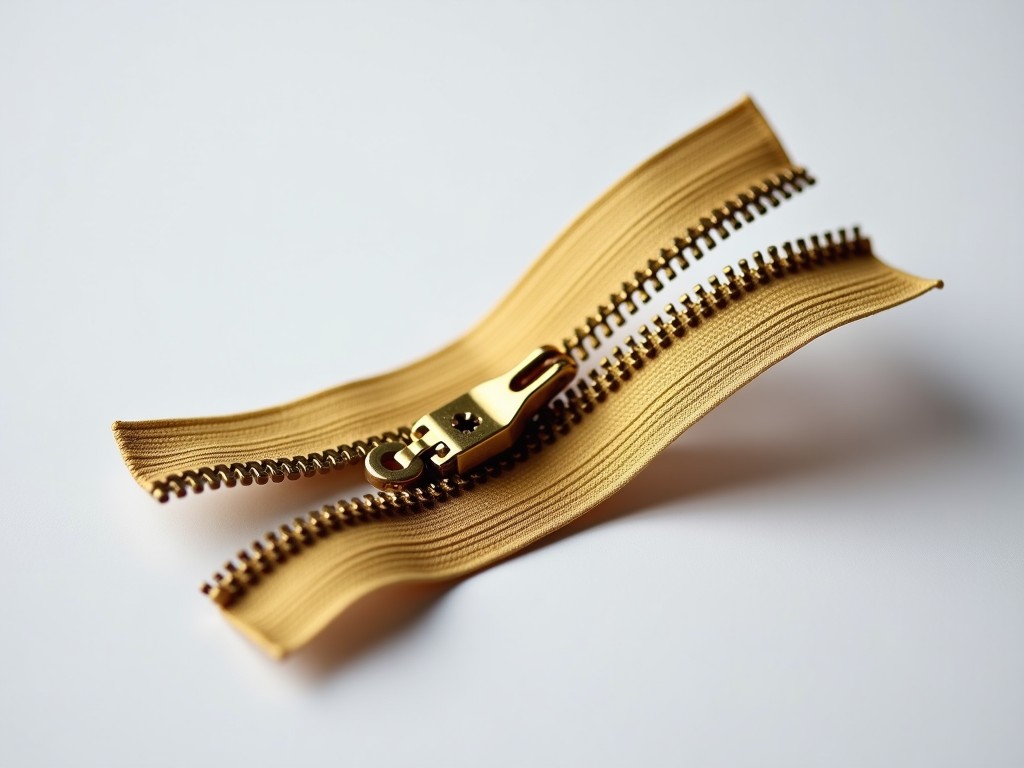
Wholesale Brass Zipper Bottom Stop Accessories
A zipper bottom stop is a small metal component crimped onto the lower end of a zipper chain to prevent the slider from disengaging. In brass construction, it provides corrosion resistance, adequate strength for repeated flexing, and a visual match to brass‑finished sliders and pulls.
Typical bottom stops are produced from C36000 free‑cutting brass, which contains approximately 60% copper, 35.5% zinc, and up to 3% lead for improved machinability. The alloy yields a tensile strength of about 350 MPa and a hardness of 80–90 HRB, sufficient to withstand the pull forces encountered during normal use without deformation.
Manufacturing begins with blanking strips of brass to the required width, followed by progressive stamping that forms the stop’s U‑shaped channel and retaining tabs. After forming, parts undergo deburring, ultrasonic cleaning, and optional surface treatment such as nickel plating or antique brass chemical finishing.
Key Technical Characteristics
- Nominal width: 2.5 mm to 4.0 mm (matches common coil sizes)
- Thickness: 0.20 mm to 0.30 mm (provides flexibility while resisting fatigue)
- Length (overall): 3.8 mm to 5.2 mm depending on design
- Dimensional tolerance: ±0.05 mm on width and thickness
- Surface roughness after plating: Ra ≤ 0.8 µm
Typical Applications
Brass bottom stops are selected when the zipper assembly requires a non‑ferrous, non‑magnetic fastener that will not stain adjacent fabrics. They are commonly used in:
- Denim and workwear jeans where brass hardware matches rivets and buttons
- Luggage and travel bags exposed to varying humidity
- Outdoor jackets and sporting goods requiring corrosion resistance
- Automotive interior trim where non‑magnetic properties prevent interference with sensors
Quality Assurance
Each production lot undergoes incoming material verification via spectrometer to confirm Cu/Zn/Pb ratios. In‑process checks include gauge measurement of width and thickness with calibrated micrometers, visual inspection under 10× magnification for burrs or cracks, and functional testing where a slider is pulled through the stop at a speed of 100 mm/min to verify retention force exceeding 5 N.
Final inspection uses statistical sampling (AQL 0.65 for critical defects). Parts are packaged in anti‑static bags with desiccant to prevent oxidation during storage and transit.
Customization Options
Buyers can specify:
- Alternative brass alloys such as C38500 (architectural brass) for enhanced corrosion resistance
- Finish choices: bright nickel, satin nickel, antique brass, or organic lacquer coating
- Custom dimensions for non‑standard coil widths (e.g., 4.5 mm for heavy‑duty applications)
- Packaging formats: bulk loose in polybags, tape‑and‑reel for automated insertion, or small‑count boxes for retail kits
Specification Table
| Parameter | Typical Value / Range | Notes |
|---|---|---|
| Material | C36000 brass (Cu ≈ 60%, Zn ≈ 35.5%, Pb ≤ 3%) | Free‑cutting, good machinability |
| Width | 2.5 mm – 4.0 mm | Matches coil size; ±0.05 mm tolerance |
| Thickness | 0.20 mm – 0.30 mm | Provides flexibility & fatigue resistance |
| Length (overall) | 3.8 mm – 5.2 mm | Dependent on design |
| Tensile Strength | ≈ 350 MPa | Typical for C36000 |
| Finish Options | Bright nickel, satin nickel, antique brass, lacquer | Custom per request |
| Retention Force (slider pull) | ≥ 5 N | Measured at 100 mm/min pull speed |
Frequently Asked Questions
Can the dimensions be customized for non‑standard zipper coils?
Yes. Width and length can be adjusted within the tooling limits; please provide the target coil width and any required clearance when requesting a quote.
What information is needed to obtain a quotation?
Required details include: material alloy (or preference for standard C36000), desired finish, quantity, width/thickness specifications, packaging preference, and delivery destination.
Which surface treatments are available for brass bottom stops?
We offer bright nickel plating, satin nickel plating, antique brass chemical finish, and clear organic lacquer. Custom plating thicknesses can be discussed.
How is product quality verified before shipment?
Each lot receives dimensional inspection, material composition verification, visual inspection under magnification, and a functional retention‑force test. Sampling follows AQL 0.65 for critical attributes.
What lead times should be expected for wholesale orders?
Standard lead time is 3–4 weeks for stocked sizes and finishes; custom tooling or special finishes may extend to 5–6 weeks.
To discuss your specific requirements or request a formal quotation, please contact our sales team.
Request Quote