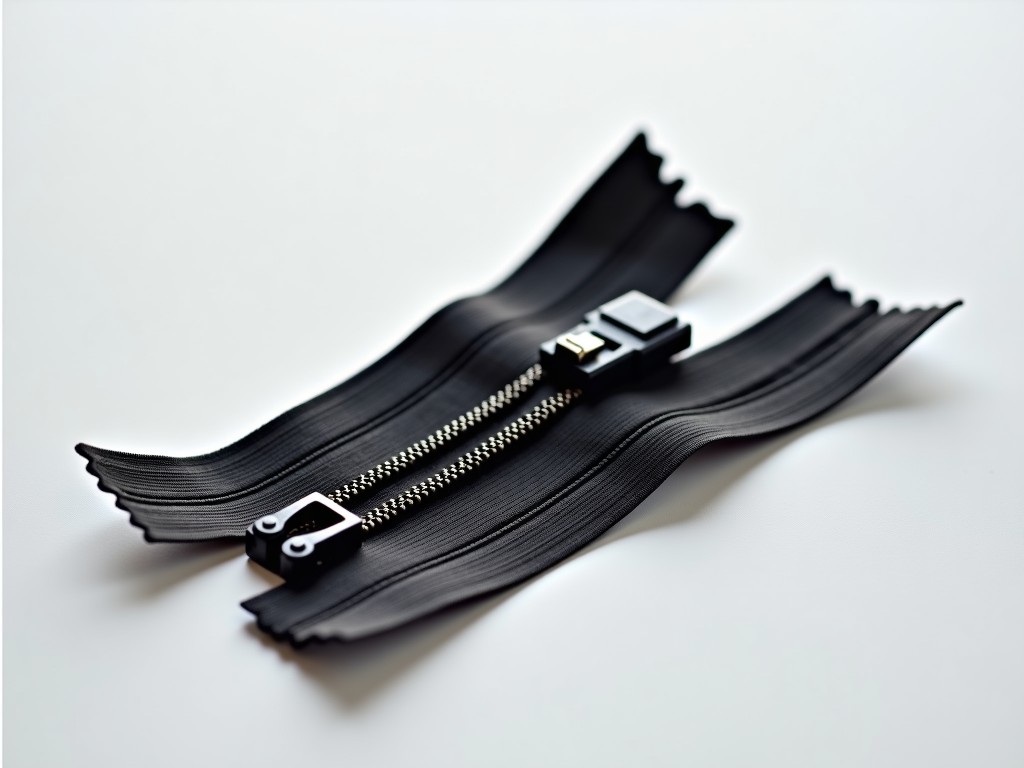
Wholesale Industrial Zipper Bottom Stop and Pin Box Supplier
Industrial zippers used in heavy‑duty applications require reliable bottom stops and pin boxes to maintain slider engagement under repeated cycling and load. This page explains the design, material choices, and manufacturing considerations that affect performance and service life.
Functional Overview
The bottom stop is a fixed component welded or crimped to the zipper tape that prevents the slider from disengaging at the lower end. The pin box encloses the retaining pin that couples the slider to the tape, providing lateral stability and preventing pin loss during operation.
In high‑vibration environments such as automotive seating, industrial curtains, or protective covers, the stop‑pin assembly must resist shear forces exceeding 150 N and maintain alignment after 10 000 cycles without deformation.
Material Options
- Stainless steel 304 – corrosion resistance suitable for outdoor and wash‑down environments.
- Stainless steel 316 – enhanced resistance to chlorides and marine exposure.
- Brass C36000 – good wear resistance and electrical conductivity for grounding applications.
- Zinc alloy Zamak 3 – cost‑effective for indoor use with moderate load requirements.
Material selection influences tensile strength, fatigue life, and compatibility with surrounding fabrics or coatings. For example, 316 stainless steel typically shows <0.02 mm pitting depth after 500 h salt‑spray testing, while brass exhibits a wear rate of ~0.001 mm per 1000 cycles under 50 N contact load.
Typical Specifications
| Parameter | Typical Value | Customization Options |
|---|---|---|
| Bottom stop thickness | 0.8 mm – 1.5 mm | Custom stamping depths up to 2 mm |
| Pin box width | 4.0 mm – 6.0 mm | Adjustable to match tape width 3‑12 mm |
| Retaining pin diameter | 1.2 mm – 2.0 mm | Hardened steel or stainless steel pins |
| Maximum shear load | 150 N (static) | Reinforced designs up to 300 N |
| Cycle life (10 % load) | >20 000 cycles | Special coatings for >50 000 cycles |
Applications and Load Considerations
In heavy‑duty truck tarpaulins, the zipper must withstand wind‑induced flapping forces that translate to cyclic tensile loads on the stop‑pin assembly. A bottom stop with a 1.2 mm thickness and a pin box reinforced with a 2 mm stainless steel pin typically limits slider migration to <0.1 mm after 15 000 cycles at 100 N load.
For protective covers on CNC machines, exposure to coolant and chips requires corrosion‑resistant materials. Selecting 316 stainless steel for both stop and pin box reduces pitting risk and maintains dimensional stability in environments with pH 9‑11 alkaline fluids.
Quality Control Philosophy
Dimensional verification is performed on a coordinate measuring machine (CMM) with a tolerance of ±0.02 mm on critical features such as stop height and pin box depth. Functional testing includes a pull‑off test at 180 N to confirm slider retention and a fatigue rig that simulates 10 000 cycles at 2 Hz.
Material certificates are supplied for each batch, and surface finish is inspected for burrs or sharp edges that could damage the zipper tape. Visual inspection under 10× magnification ensures proper crimp formation without cracks.
Packaging and Logistics
Components are packed in anti‑static, moisture‑barrier bags with desiccant packs, then placed in corrugated cartons sized to prevent movement during transit. Cartons are labeled with part number, material grade, and quantity, facilitating traceability to the material test report.
For overseas shipments, pallets are stretch‑wrapped and secured with corner boards to withstand forklift handling and container stacking. Standard lead time is 3‑4 weeks for stocked sizes; custom designs require an additional 1‑2 weeks for tooling and approval.
Call to Action
To discuss specific dimensions, material grades, or volume pricing for your industrial zipper bottom stop and pin box requirements, please reach out with your application details. Our engineering team will review load conditions, cycling expectations, and environmental factors to propose a solution that minimizes risk and ensures long‑term performance.